
Last updated September 10, 2026
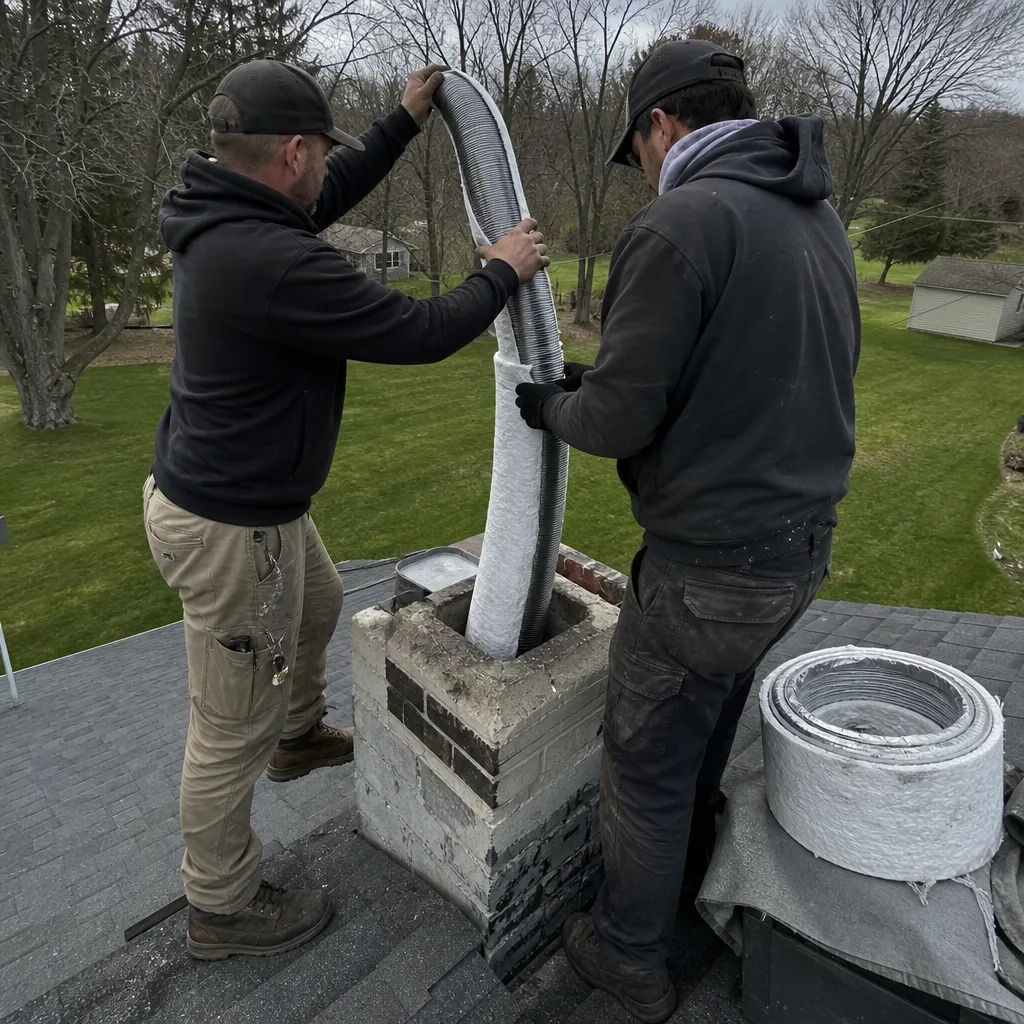
Level 1 sweep and inspection to the NFPA 211 annual standard - flue, crown, cap, and flashing checked and photographed
Chimney sweep logs do not sweep chimneys. They loosen some creosote - which then falls where a brush and vacuum still have to collect it.
 Before
 After
After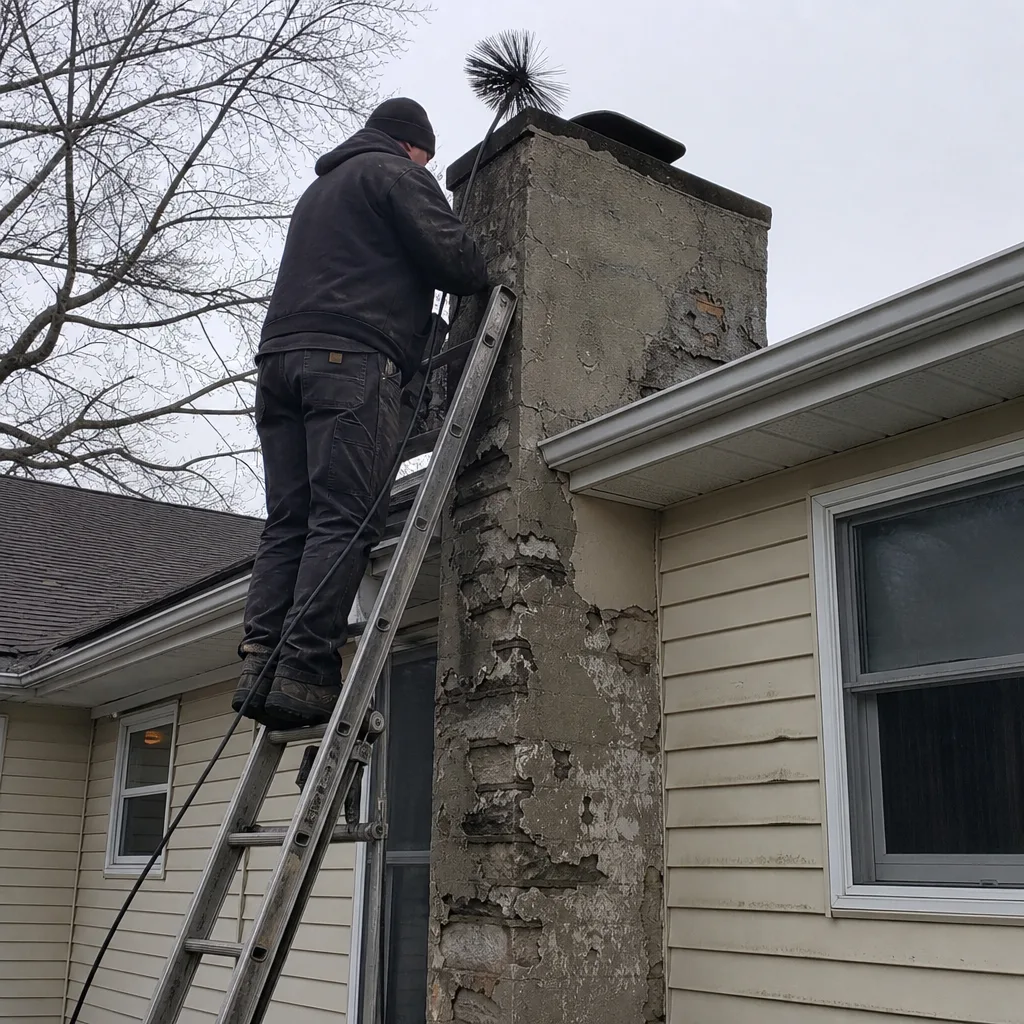 Before
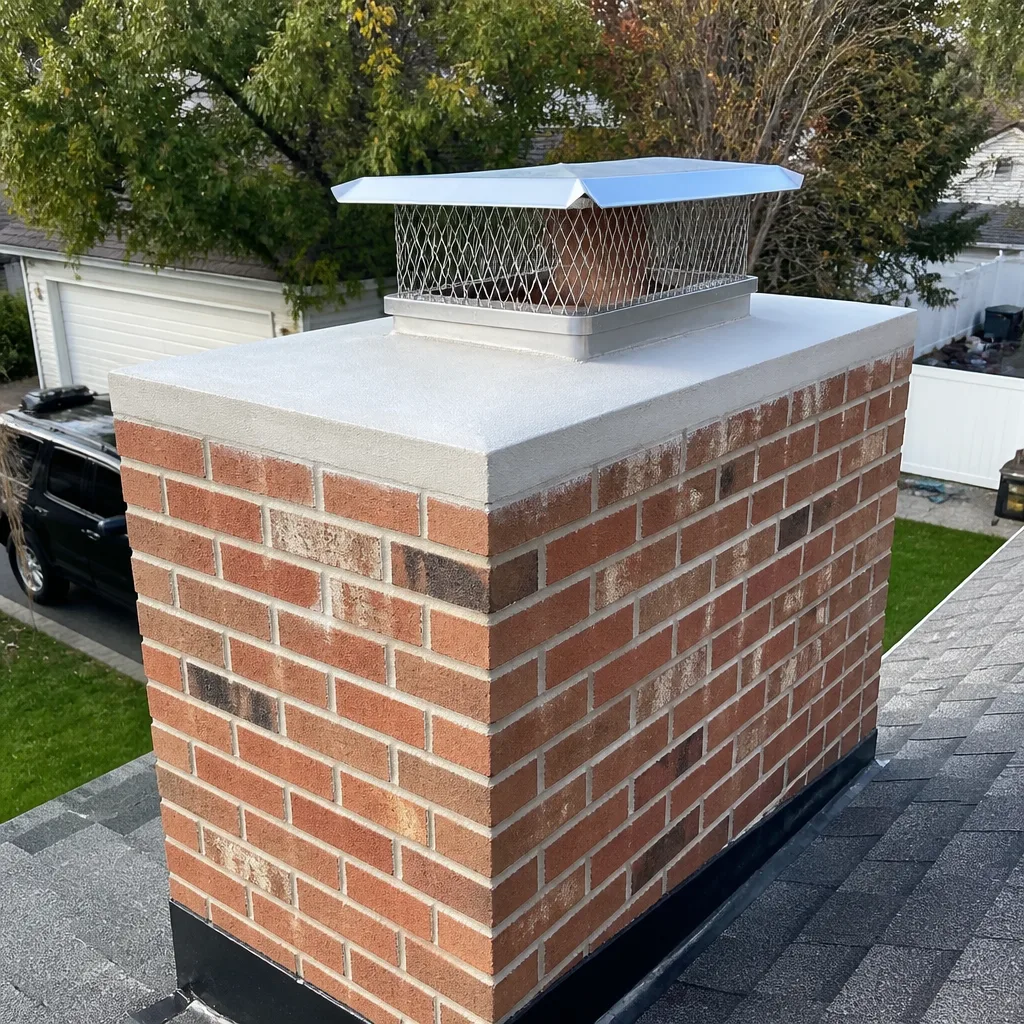 After
After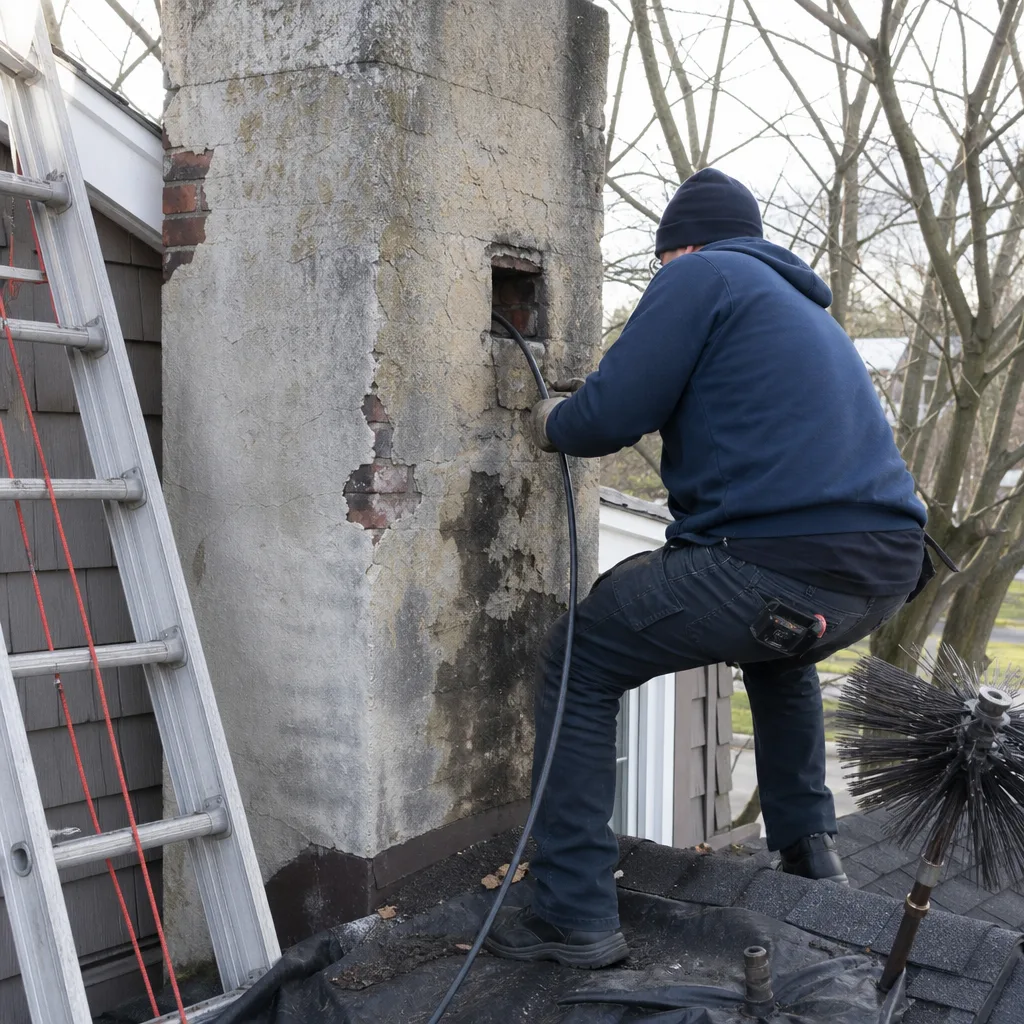 Before
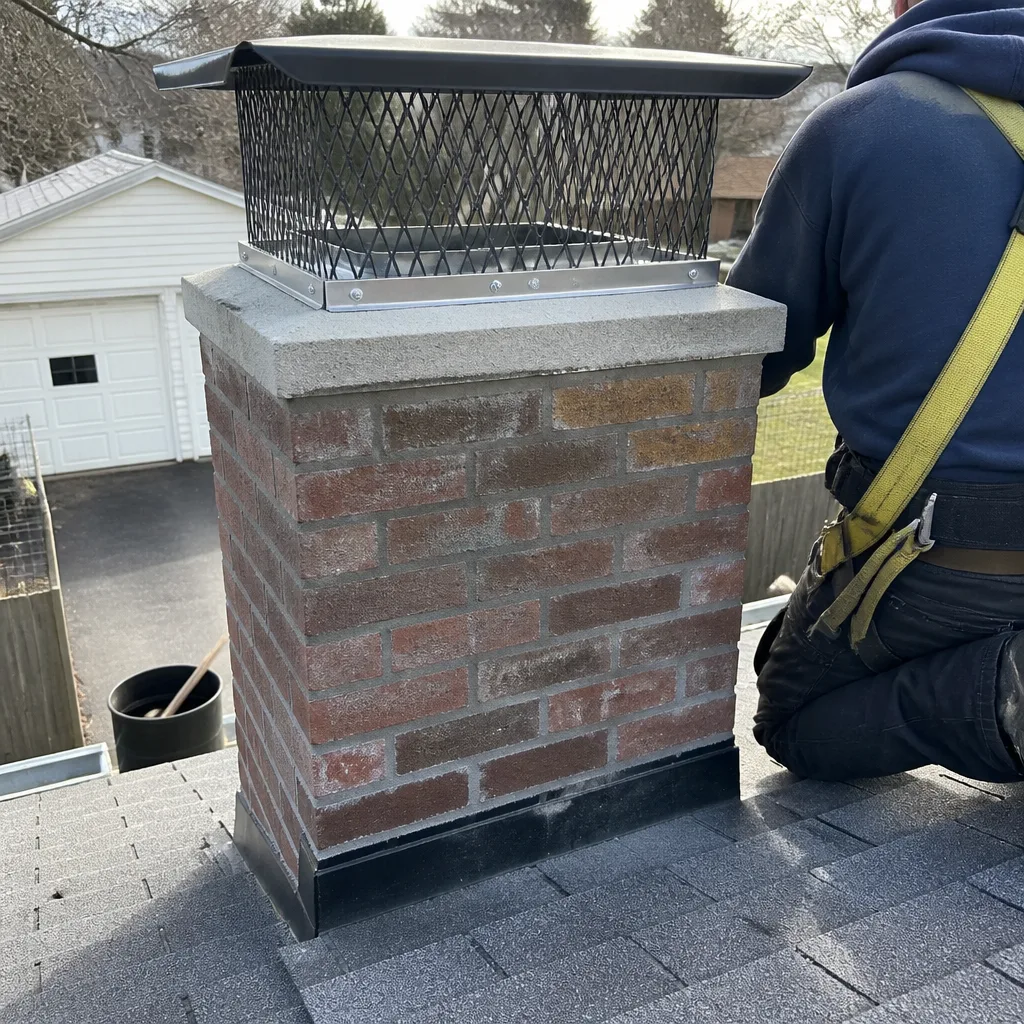 After
AfterChimney Cleaning & Sweep Maintenance Checklist for Deer Park Homeowners
If your sweep finishes in under 45 minutes and doesn’t show you a single photo or pull out a flashlight, the checklist he ran through was probably shorter than the one I use just for the firebox. Most Deer Park homeowners have been through this: you pay for a cleaning, the guy leaves, and you still can’t answer one simple question - what did he actually look at? This guide fixes that. You’ll learn the specific, observable details a real sweep checks, from spalling brick to crown hairline cracks, so the next time someone climbs on your roof, you can have an informed conversation instead of just nodding along. By the end, you’ll know what’s homeowner territory, what needs a licensed professional, and when in Deer Park’s calendar you should book before the rush.
Quick Answer
A proper chimney maintenance checklist for Deer Park homes covers six areas: firebox brick and mortar condition, damper function, flue liner integrity, smoke chamber buildup, crown and cap condition from the roof, and exterior masonry from the ground. Homeowners can check the firebox floor, look for white staining or flaking brick, and listen for damper operation themselves. Everything above the firebox - liner camera inspection, crown repair, cap replacement - needs Chimney Cleaning & Sweep services, ideally before late September when Deer Park booking windows fill up.
Table of Contents
- The Firebox Floor Check: What Damage Actually Looks Like
- Crown Inspection: What You Can See From the Ground vs. What Needs a Roof Visit
- Why Late September Beats October: Deer Park Booking Reality
- The Liner Check: Tap Sounds, Camera Evidence, and What Cracking Means
- Damper and Smoke Chamber: The Two Most-Skipped Items
- Homeowner Tasks vs. What New York Requires a Licensed Sweep For
- Creosote Levels Explained: First-Degree to Third-Degree Glaze
- Off-Season Maintenance: Why Chimneys Break When Nobody’s Burning
The Firebox Floor Check: What Damage Actually Looks Like
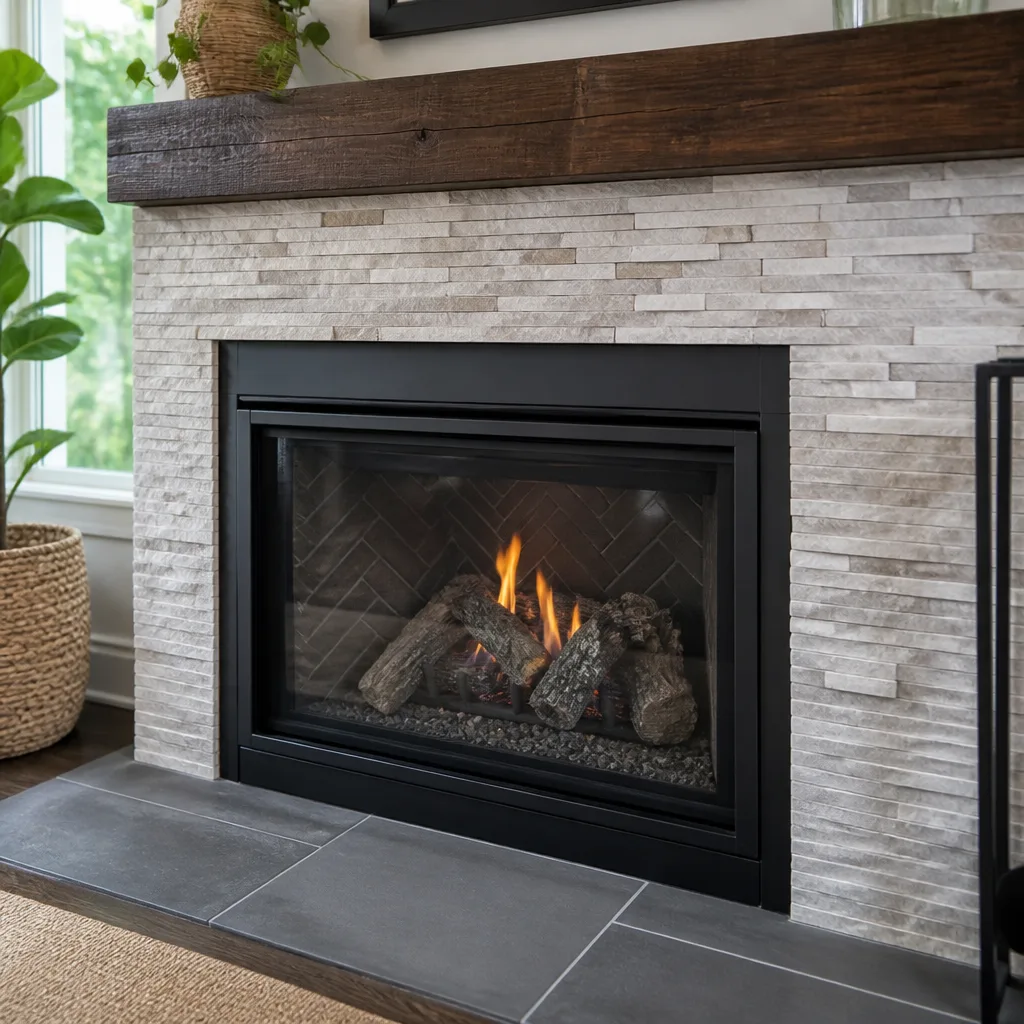
Before you call anyone, walk over to your fireplace and look down at the floor of the firebox. Not the ash - the brick itself. In Deer Park, where winter freeze-thaw cycles work on masonry every year, what you see down there tells you more than any phone estimate ever will.
Here’s what we look for, in order:
- Spalling brick. Spalling means the brick face has popped off in flakes or chunks, leaving a rough, recessed surface behind. Wet brick freezes, the moisture expands, and the face literally blows off. If you see dime-sized divots or brick that looks like it’s peeling, water has already gotten in. This is the most common Deer Park firebox issue we document.
- Efflorescence. That white, chalky powder on the brick is efflorescence - salt deposits left behind when water migrates through the masonry and evaporates. A little is cosmetic. A lot, especially in patterns that grow over a season, means water is moving through your chimney at a rate worth investigating.
- Mortar crumble. Run a finger (when the fireplace is cold) along the mortar joints at the firebox floor. If it comes away sandy or the joint has visible gaps, the mortar is failing. Gaps wider than a quarter inch behind the firebrick let heat reach combustible framing faster than you’d think.
- Rust staining. Orange-brown streaks near the damper or along the firebox walls point to water coming down the flue, usually a crown or cap problem. It’s not a firebox problem by itself - it’s evidence of a problem above.
None of this requires a professional eyeball. You can do this check in five minutes on a Saturday morning. What it gives you is leverage: when someone quotes you a liner job, you’ll already know whether your firebox shows water damage or not, and the two stories should match. If they don’t, ask why. Our Chimney Repair in Deer Park work always starts with exactly this walkthrough, camera in hand, so you see what we see.
Crown Inspection: What You Can See From the Ground vs. What Needs a Roof Visit
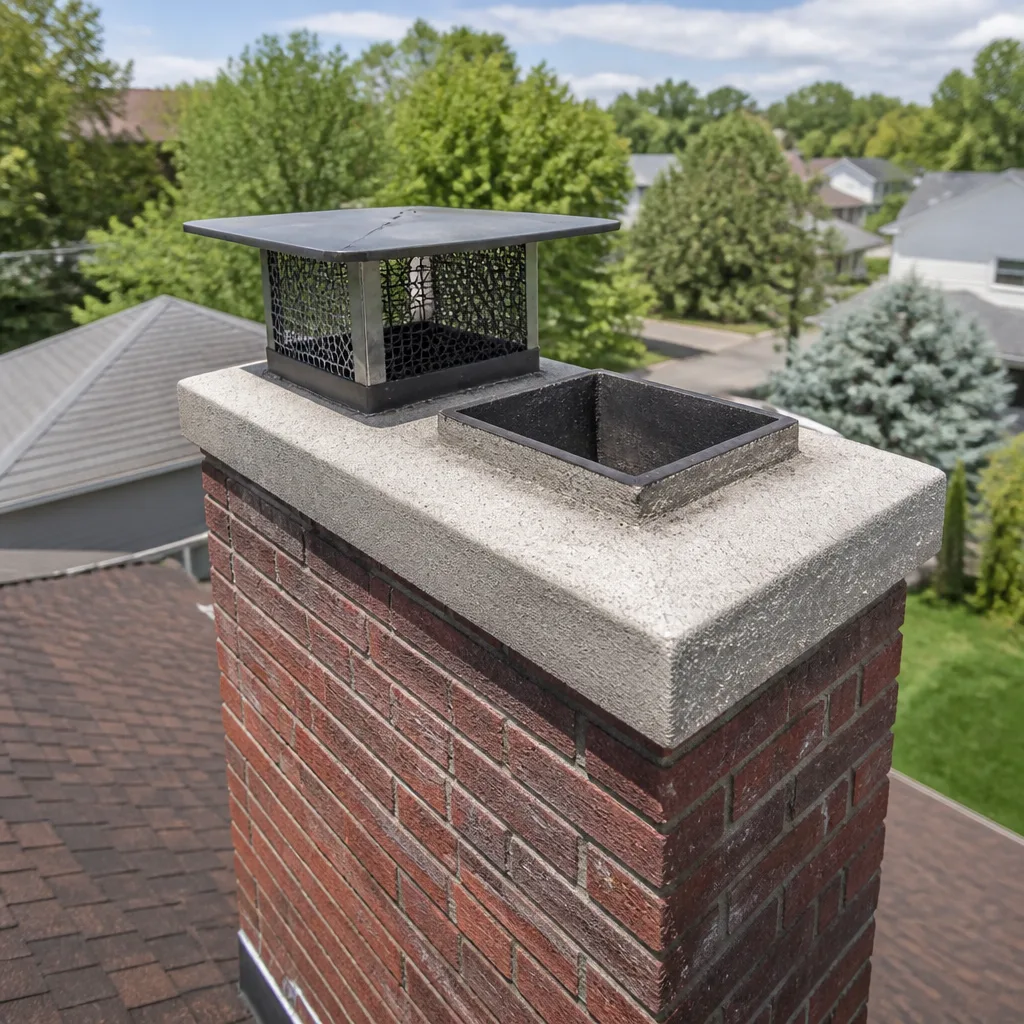
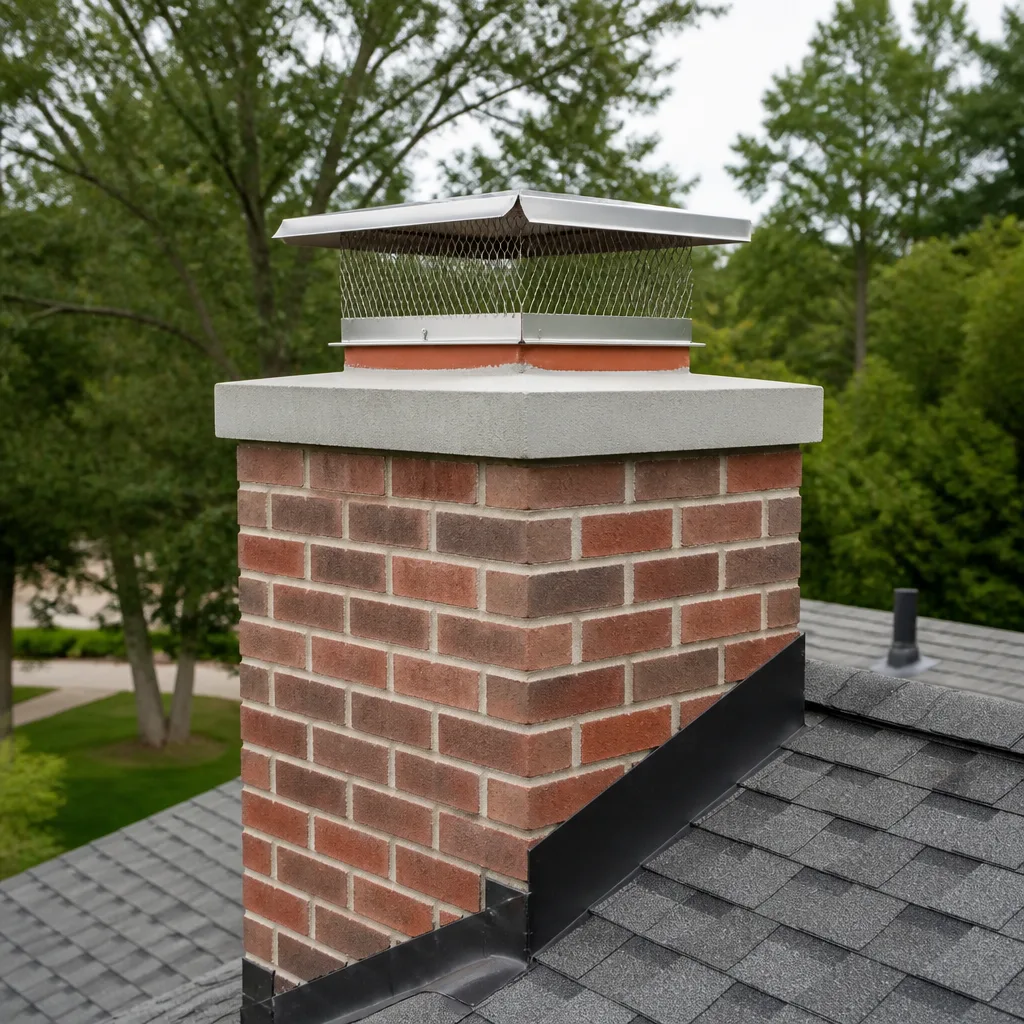
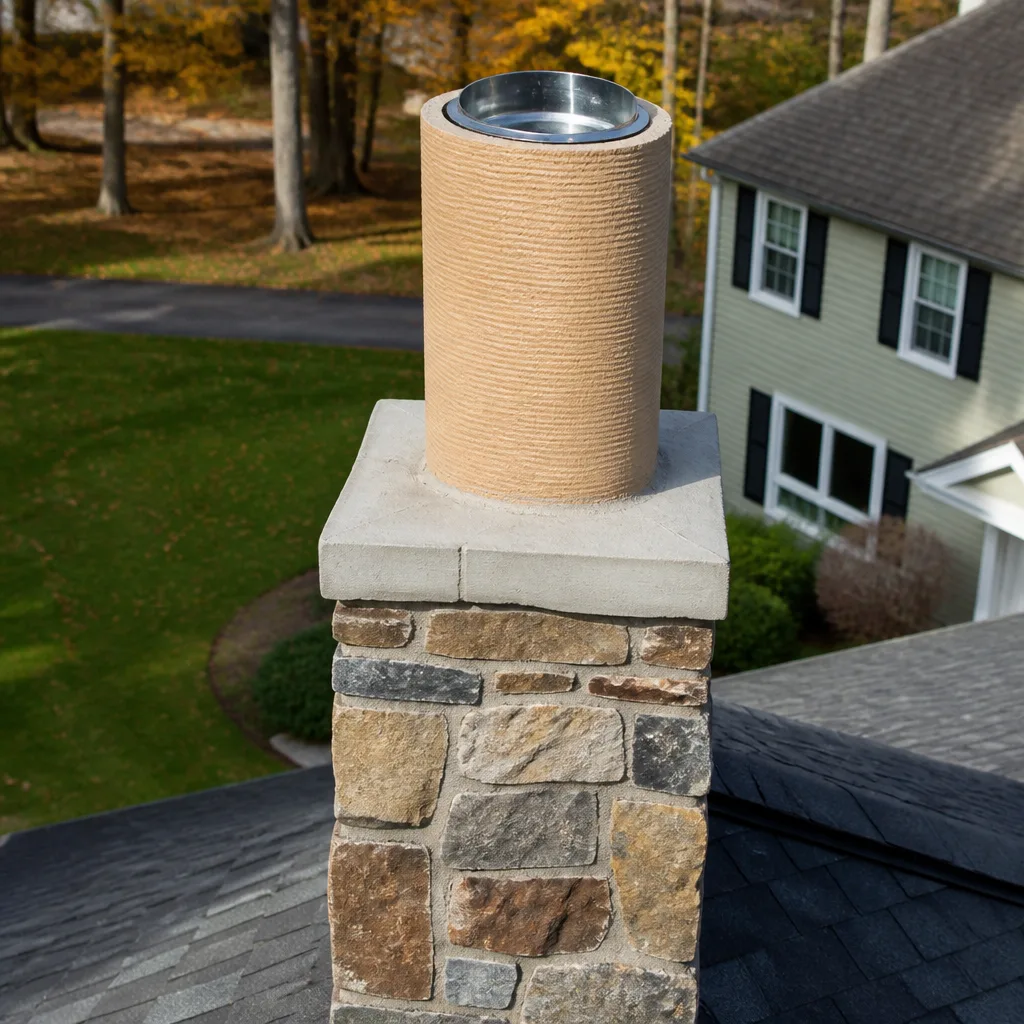
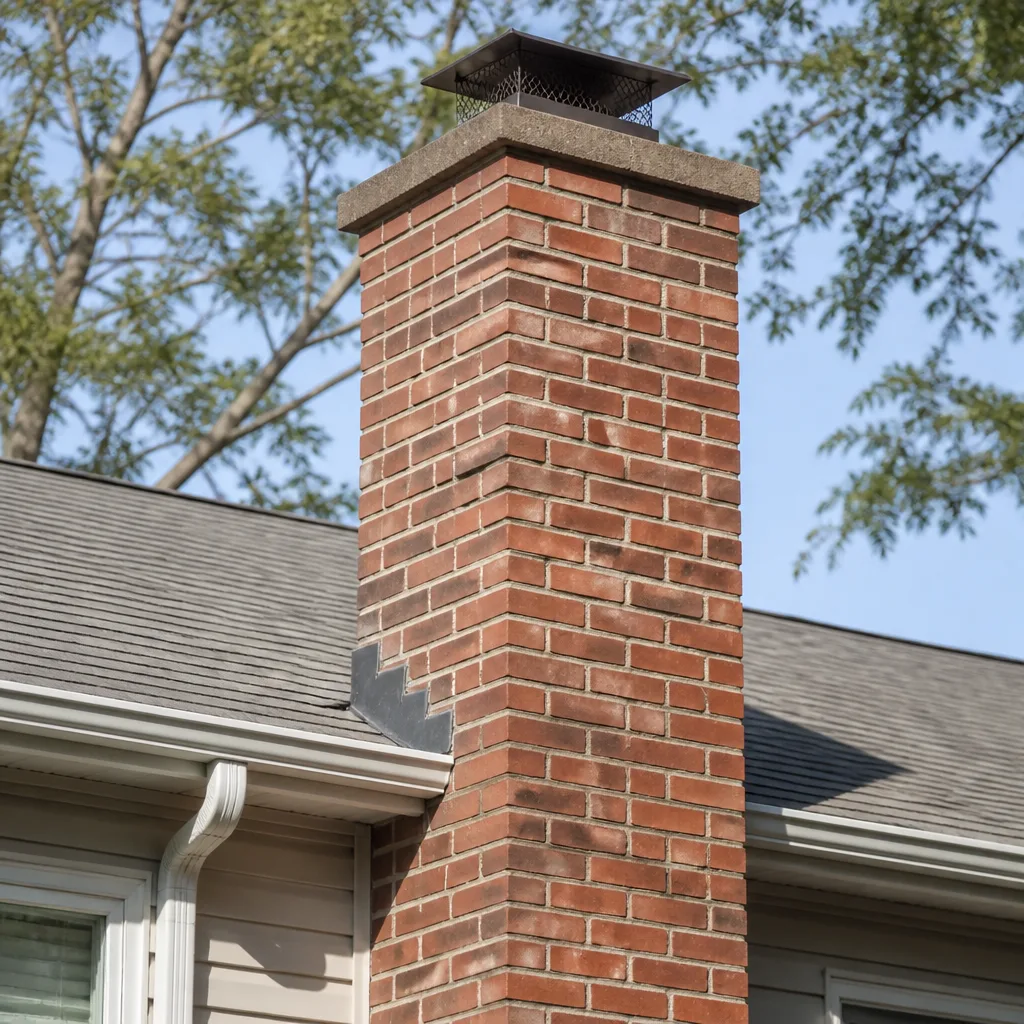
The crown is the concrete slab on top of your chimney, the one thing standing between your brick and Deer Park rain. Most homeowners never look at it. Most sweeps don’t either, frankly, because it requires actually getting on the roof. Here’s how to split the inspection between what you can do from your driveway and what needs a ladder.
From the ground, you can check three things:
- Visible leaning or tilting. Stand back twenty feet and look at the chimney against the roofline. Any lean at all, even a couple degrees, is structural - not a cleaning issue. Call sooner rather than later.
- White streaking on the chimney sides. Efflorescence on the exterior brick, especially concentrated below the crown, tells you the crown isn’t shedding water the way it should. Water is running down the brick face instead of off the edge.
- Missing cap or spark arrestor. If you’ve got an open flue tile with no cap on top, animals have probably explored it already. Squirrels and raccoons in Deer Park chimneys are a spring constant.
What needs a roof visit: hairline cracks in the crown itself, separation between the crown and the flue tile, or a crown that’s been caulked with silicone by a previous owner (silicone fails in Deer Park’s freeze-thaw within about two years, every time). These are exactly the things a licensed sweep looks for when he’s up there. We repair crowns with a proper mortar wash or a custom pour, never caulk, because caulk doesn’t move with the masonry. If you want the full picture on what a crown job involves before you make any calls, we cover it step-by-step on our Fireplace Services in Deer Park page.
Why Late September Beats October: Deer Park Booking Reality
Every year, the same pattern. October first hits, the first cold night arrives, and suddenly every chimney company in Suffolk County is booked out three weeks. In Deer Park - where half the homes date to the 1950s and 60s and many fireplaces haven’t been opened since March - the late-season rush is real and it’s predictable. See our Chimney Cleaning Warning Signs: A Deer Park Homeowner’s Reference Guide for what to watch for.
Late September is the sweet spot for three reasons:
- Your chimney has been idle for months, and the creosote has had time to set. Whatever was deposited last winter has been sitting in the flue all summer. In humid August heat, creosote absorbs moisture and becomes sticker, clinging to the liner more aggressively. A September sweep removes it before it hardens into second-degree buildup in the first October fires.
- Booking windows are still open. By mid-October in Deer Park, you’re waiting two to three weeks for a reputable company. By late November, you’re in the “we can squeeze you in December” zone, which means you’re burning with a dirty chimney or not burning at all.
- Any repairs that turn up can be finished before you actually want to light a fire. If the sweep takes a camera down and finds a cracked tile, waiting until late October means that repair now competes with everyone else’s emergency calls. In late September, there’s time to do it right.
Once a year, burn or no burn. Chimneys break in the off-season too, and Deer Park’s wet springs and humid summers do more damage to an unlined chimney than any winter fire. If you haven’t booked anything yet, our Chimney Cleaning & Sweep in Deer Park page lays out exactly what a standard visit includes and what it costs.
The Liner Check: Tap Sounds, Camera Evidence, and What Cracking Means
Your flue doesn’t care how the fire looks. It cares how it breathes. The liner is the channel that carries smoke, heat, and combustion gases out of your house, and its condition matters more than anything else in this checklist. Here’s how a real liner check goes, and what you should expect from whoever does it.
The first thing we do is look up the flue with a flashlight. If it’s a clay tile liner, we’re checking for two indicators: missing flue tile segments and gaps between tiles. Clay tiles crack horizontally, not cleanly - you’ll see jagged fractures, sections shifted out of alignment, or tiles that are just gone. Then we tap the exposed flue tile at the top with a tool handle. A solid tile produces a clean, ringing “ting.” A cracked tile gives you a dull, flat “thunk.” That tap test tells us whether the crack is just visual or whether the tile is structurally failing all the way through.
The camera is the part you should insist on. We run a camera down the entire flue, every single time, and we show you the footage. A cracked liner looks like a hairline split on camera, but what matters is the pattern: vertical cracks mean thermal stress, horizontal cracks mean water freeze damage, and offsets mean the chimney settled. In Deer Park, where soil shifts seasonally and older homes have unlined flues or clay liners that have been in place since Eisenhower, we see all three regularly.
What does a cracked liner actually mean? Gaps let heat reach the brick and framing, and gaps let carbon monoxide move into spaces you didn’t intend. If the damage is localized, a HeatShield resurfacing job can repair it without a full rebuild. If the tiles have shifted or collapsed, a full DuraFlex stainless liner replacement is the answer. Both are jobs we do regularly, and we’ll show you the footage that justifies the work before you spend a dollar. In our experience, if a company tells you a liner is “fine” without a camera, they didn’t look. It’s that simple.
Damper and Smoke Chamber: The Two Most-Skipped Items
Most checklists mention “inspect the damper” and leave it there. That’s not an inspection. Here’s what actually happens in the field.
Stand at the fireplace and open and close the damper. It should move smoothly through its whole range, not stick halfway. If it’s a throat damper (the traditional flap just above the firebox), the metal should seat fully when closed, with no visible gaps around the edge. Rotted damper flaps, rusted hinges, or mechanisms that won’t close all the way mean heated air from your house is escaping up the chimney all winter, every winter. In a Deer Park home with rising utility costs, a gap the size of a quarter is money leaving the house monthly.
The smoke chamber is the area between the damper and the flue, and it’s the most-missed section of any chimney inspection. It’s invisible from the firebox floor, hidden behind the damper frame. But this is where smoke swirls and slows before entering the flue, and in older Deer Park homes the smoke chamber corbels (the stepped brick that narrows the opening) often have exposed, missing, or crumbling mortar. Creosote packed into those gaps is not reachable by a standard brush from above. If your sweep doesn’t mention the smoke chamber, ask whether he looked. If the answer is a blank stare, that’s your signal.
In our own work, the smoke chamber gets the same camera as the flue, and loose mortar or heavy deposits get addressed with a parge (a skim coat that smooths the surface) rather than being brushed and ignored. It’s slower work. It’s also the difference between a chimney that drafts cleanly through the winter and one that seeps smoke into the room on a cold start.
Homeowner Tasks vs. What New York Requires a Licensed Sweep For
The honest split is this: you own everything you can see from the firebox floor. You don’t own anything above the damper that requires a ladder, a camera, or both.
Homeowner territory:
- Visual inspection of firebox brick, mortar joints, and the damper operation, same as we covered above.
- Keeping the firebox floor clear of ash deeper than a couple inches (though honestly, if you burn regularly, scoop it weekly - ash absorbs moisture and accelerates brick deterioration in Deer Park humidity).
- Checking the exterior chimney from the ground for visible leaning, missing cap, or white staining.
- Testing that smoke draws upward when you light a twisted newspaper and hold it at the damper opening (cold chimney reversed draft is common in Deer Park’s still September air - a cold flue pulls smoke into the room, and opening a window a crack usually reverses it).
- Replacing the batteries in your carbon monoxide detector. Do this when you read this, not after you light the first fire.
Professional territory in New York:
- Liner inspection and repair. No homeowner should be inside the flue with a camera or - worse - trying to chisel out a cracked tile. New York code requires the liner to be sized and installed correctly, and a botched DIY liner job is a fire waiting to happen.
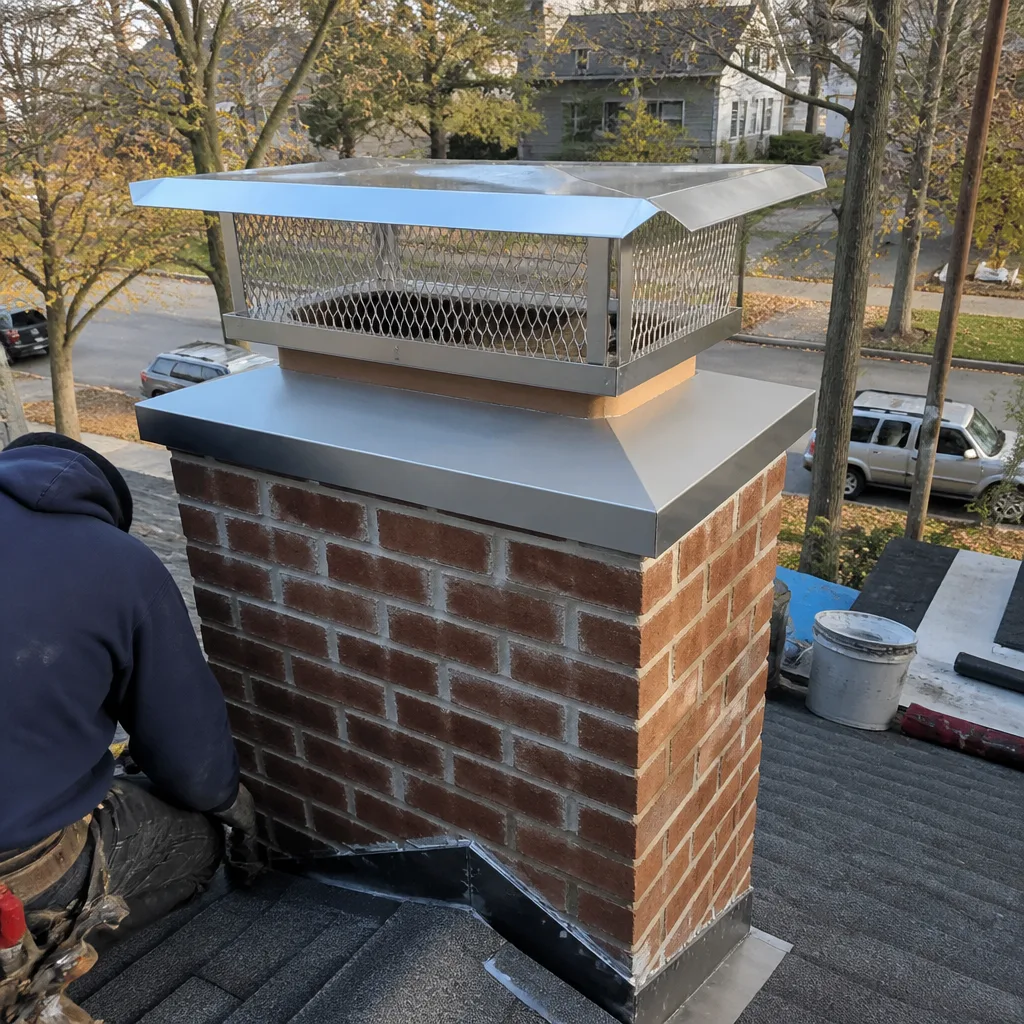
- Crown and cap repair from the roof. Beyond the safety of being on the roof, the materials matter: wrong crown mixes fail in a season or two, and a cap installed without proper sealing invites animal entry in the same week.
- Chase cover or flashing work. If water is entering around the roofline, the flashing details are beyond a weekend handyman’s reach.
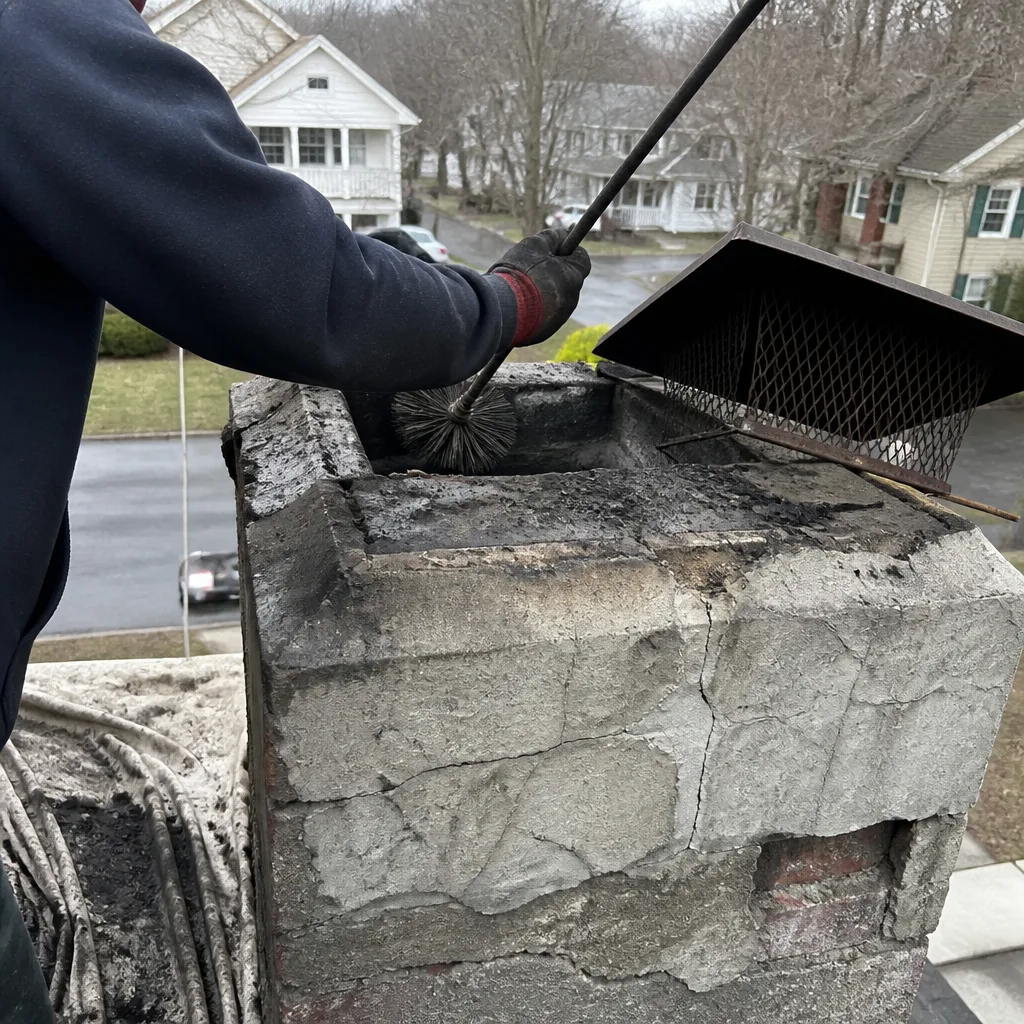
- Creosote glaze removal. Third-degree creosote is a hard, shiny tar that standard brushes won’t touch. It takes professional chemical treatment and mechanical removal. First-degree creosote is a brush job. Third-degree is a glaze - catch it early.
When we train new crew members, the rule is simple: if you can’t see it from the ground, it gets a camera before it gets an opinion. Whatever company you use in Deer Park, hold them to that standard.
Creosote Levels Explained: First-Degree to Third-Degree Glaze
Creosote is the residue of incomplete wood combustion. It deposits on the flue walls as smoke cools. The amount and type tells you how dirty the chimney actually is, and it’s the single most useful piece of information a homeowner can understand.
First-degree creosote is fine, dusty, sooty residue. It brushes off easily with a nylon or wire brush. This is what you’d expect after a single season of burning seasoned hardwood. A routine sweep removes it in about an hour. No drama.
Second-degree creosote is flaky and crunchy, like granulated charcoal. It’s harder to remove and starts to restrict airflow in the flue. This develops when fires burn at lower temperatures - wet wood, air-starved fires, or long, smoldering burns. In Deer Park, where oak and maple are the common firewood, second-degree creosote happens when wood hasn’t been seasoned a full year before burning.
Third-degree creosote is the one that scares me. It’s a dense, shiny, tar-like glaze that hardens onto the flue liner. It doesn’t brush off. It takes chemical treatment (often repeated) and mechanical removal. Third-degree creosote is fuel, and a hot enough fire ignites it into a chimney fire that burns at 2,000 degrees. The first time you hear that roar - it sounds like a freight train in your walls - you’ll never forget it. We’d rather you never hear it. If you suspect you have a glaze situation, our Top Hat Chimney home page has everything you need to reach Wendell directly.
One thing we hear often: “I burn hot fires, so I don’t need to sweep.” Burning hot reduces creosote formation, but it doesn’t eliminate it. And it increases the thermal stress on the liner. There’s no burn style that replaces the annual sweep. Once a year, burn or no burn.
Off-Season Maintenance: Why Chimneys Break When Nobody’s Burning
Deer Park chimneys don’t fail during the winter, when the fire is roaring and the heat pushes moisture out. They fail in March and April, when the thaw starts. Freeze-thaw cycles are the enemy: water soaks into microscopic pores in the brick and mortar, freezes overnight, expands, and cracks. Then it thaws, soaks deeper, freezes again. A single Deer Park winter can subject your chimney to forty or fifty freeze-thaw cycles.
The off-season checklist:
- Check the exterior quarterly. Spring is the big one - after the last thaw. Look for new white staining, new cracks, chunks of mortar missing from joints, or brick faces popping off. Compare to what it looked like in the fall.
- Keep the damper closed in summer. An open damper circulates humid Deer Park air through the chimney, which accelerates corrosion on metal dampers and keeps creosote damp and sticky. If you notice a musty smell from the fireplace in August, the damper’s either not sealed or the chimney cap’s missing (rain in, humidity out).
- Check the cap after storms. A wind-driven branch or heavy hail can dent or knock a cap off entirely. Walk around after any significant storm and look up.
- If animals have been in the chimney, don’t ignore it. Raccoons in spring are common in Deer Park. The noise usually tells you. Once they’re out, a cap replacement prevents the repeat, and a good sweep removes the nesting material - which is highly flammable and blocks the flue.
None of this is about being a hero. It’s about catching problems when they’re cheap. A crown hairline crack fixed in April in Deer Park is a couple hundred dollars. That same crack, after a year of freeze-thaw, becomes a partial rebuild. Ask anyone on your street who’s put it off.
Common Mistakes to Avoid
- Skipping the camera inspection. If a sweep doesn’t run a camera down the flue, he hasn’t actually inspected it. A brush and a flashlight don’t see hairline cracks or a smoke chamber packed with creosote. In our work, the camera footage and a plain-English verdict come every time, no exceptions.
- Burning wet or unseasoned wood. Wet wood produces cool, smoky fires, which produce second-degree creosote fast. In Deer Park, wood needs a full year split and stacked off the ground. Burning it early is how chimneys glaze in a single season.
- Caulking the crown as a “fix.” We covered this, but it bears repeating: silicone caulk on a crown fails in Deer Park’s freeze-thaw within two years. It’s a temporary hack that creates a false sense of security. The water gets behind it and keeps working.
- Closing the damper while embers are still warm. You’d think it’s obvious, but every winter we see dampers warped from being closed too soon. Embers out. Damper closed. In that order.
- Ignoring the carbon monoxide detector. Replace the batteries twice a year, same day you change your clocks. A cracked liner plus a closed damper equals CO in the living space. It’s not rare. It’s avoidable.
- Hiring on price alone. The national outfits quote one price on the phone and another at the door. You’ve already experienced it - that’s why you’re reading this. A local Deer Park sweep with a published name is accountable in a way a call center never will be. Wendell puts his name on the work and runs into you again on Saturday.
- Treating the annual sweep as optional. It’s not. Once a year, burn or no burn. The $200-something you spend on a sweep catches the $4,000 problem before it starts.
When to Call a Professional
Call a licensed sweep when you see any of these: cracked or missing flue tiles (visible from the top of the chimney or found on camera), third-degree creosote glaze, white staining or spalling brick that’s progressing season over season, a leaning chimney, water dripping inside the firebox after rain, animal smells or nesting material, or a damper that won’t fully open or close. If you’ve never had the chimney inspected since you bought the house, that’s the call too. Don’t wait until October. Top Hat Chimney has been serving Deer Park since 1999, and we offer free estimates in the area - call (631) 214-2108 and a live person answers, around the clock.
Frequently Asked Questions
Once a year, burn or no burn. The National Fire Protection Association standard is annual inspection and cleaning as needed, and in Deer Park’s humid climate, even an unused chimney collects moisture and deteriorates. If you burn more than twice a week through the winter, have it checked mid-season too.
A standard cleaning and inspection in the Deer Park area typically runs $180 to $320, depending on whether a camera inspection is included, the height of the roofline, and the creosote level. Top Hat Chimney gives upfront pricing before any tool comes off the truck - the number you hear on the phone is the number on the invoice. Call (631) 214-2108 for an exact quote.
On camera, it looks like a hairline split running through the clay tile, often with jagged edges. You might also see a tile segment that’s shifted completely out of alignment, creating a visible gap between sections. On a tap test, a cracked tile gives a dull “thunk” instead of a clear ring. If your sweep can’t show you the footage, he can’t prove the liner’s fine.
You can do the firebox floor inspection and the exterior ground-level checks from this guide. You cannot safely clean the flue, the smoke chamber, or the liner without professional tools and training - and in New York, liner work requires a licensed professional. The risk isn’t just height; it’s the creosote and debris you disrupt without proper equipment. Once a year, a licensed sweep is the call.
Creosote accumulates. First-degree becomes second-degree, second-degree becomes glaze, and glaze is fuel for a chimney fire. Even without a fire, neglected chimneys in Deer Park collect water through cracks and missing caps, which turns a $200 cleaning into a $3,000 liner job. The most expensive chimney is the one that’s been ignored.
Not necessarily. A small, localized crack can often be repaired with a resurfacing system like HeatShield or a partial section replacement, depending on the damage type. A full DuraFlex stainless liner is the answer when tiles have collapsed, shifted, or the damage runs more than a couple feet. The camera tells you which, and we’ll show you the footage before any recommendation. If you’re not sure, Top Hat Chimney offers a free second opinion on any written estimate you’ve gotten elsewhere.
The Bottom Line
The Deer Park homeowner’s chimney checklist comes down to six areas: firebox brick and mortar, damper function, liner condition, smoke chamber buildup, crown and cap integrity, and exterior masonry. You can handle the firebox floor, the exterior walk-around, and the damper check yourself. Everything above the damper needs a licensed sweep with a camera. Book in late September, not late October, and hold any sweep to the standard of showing you the evidence. Top Hat Chimney has been serving Deer Park since 1999, and every job comes with the 90-Day Done Right Promise in writing. For more guides & resources, visit our blog. Call (631) 214-2108 for a free estimate - a live person answers, 24/7, and it may well be Wendell himself on the line.
Written by Wendell Pike, Owner at Top Hat Chimney, serving Deer Park since 1999.