
Level 1 sweep and inspection to the NFPA 211 annual standard - flue, crown, cap, and flashing checked and photographed
Chimney sweep logs do not sweep chimneys. They loosen some creosote - which then falls where a brush and vacuum still have to collect it.
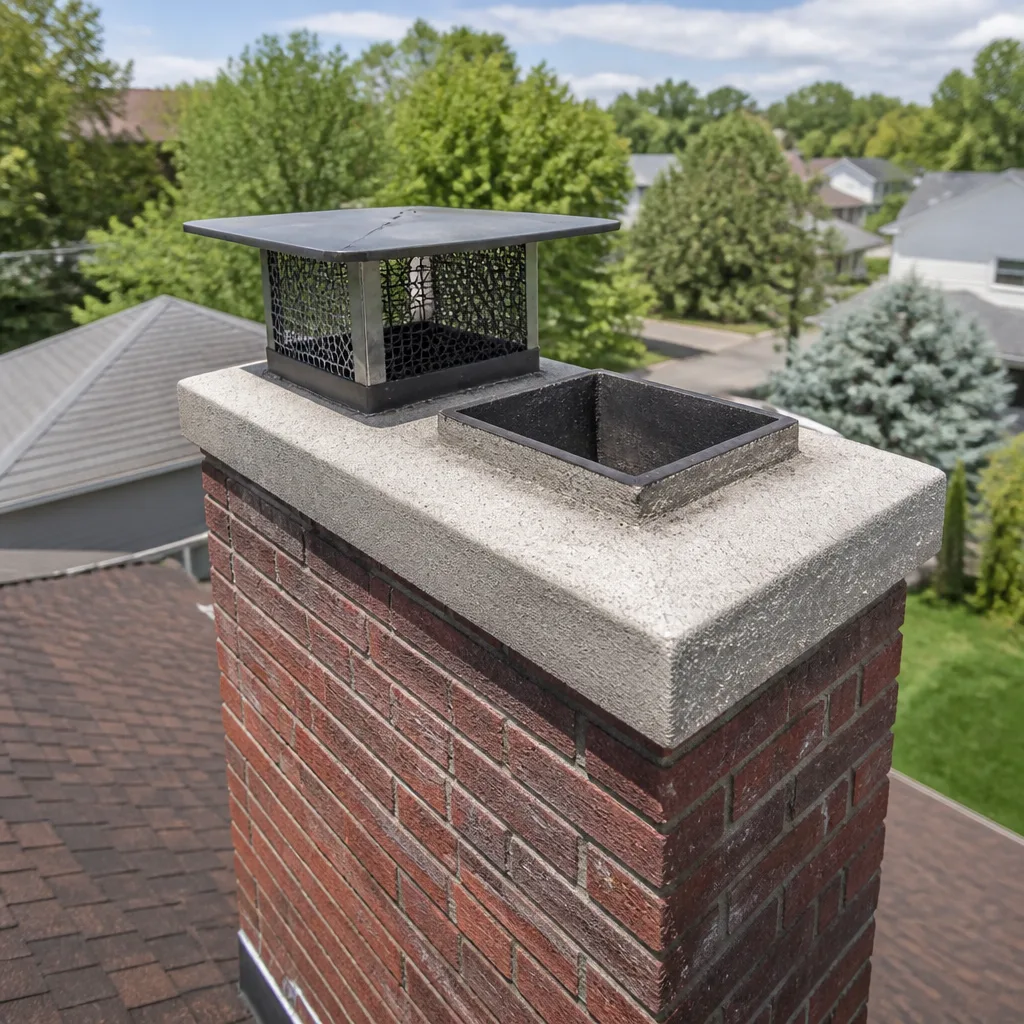
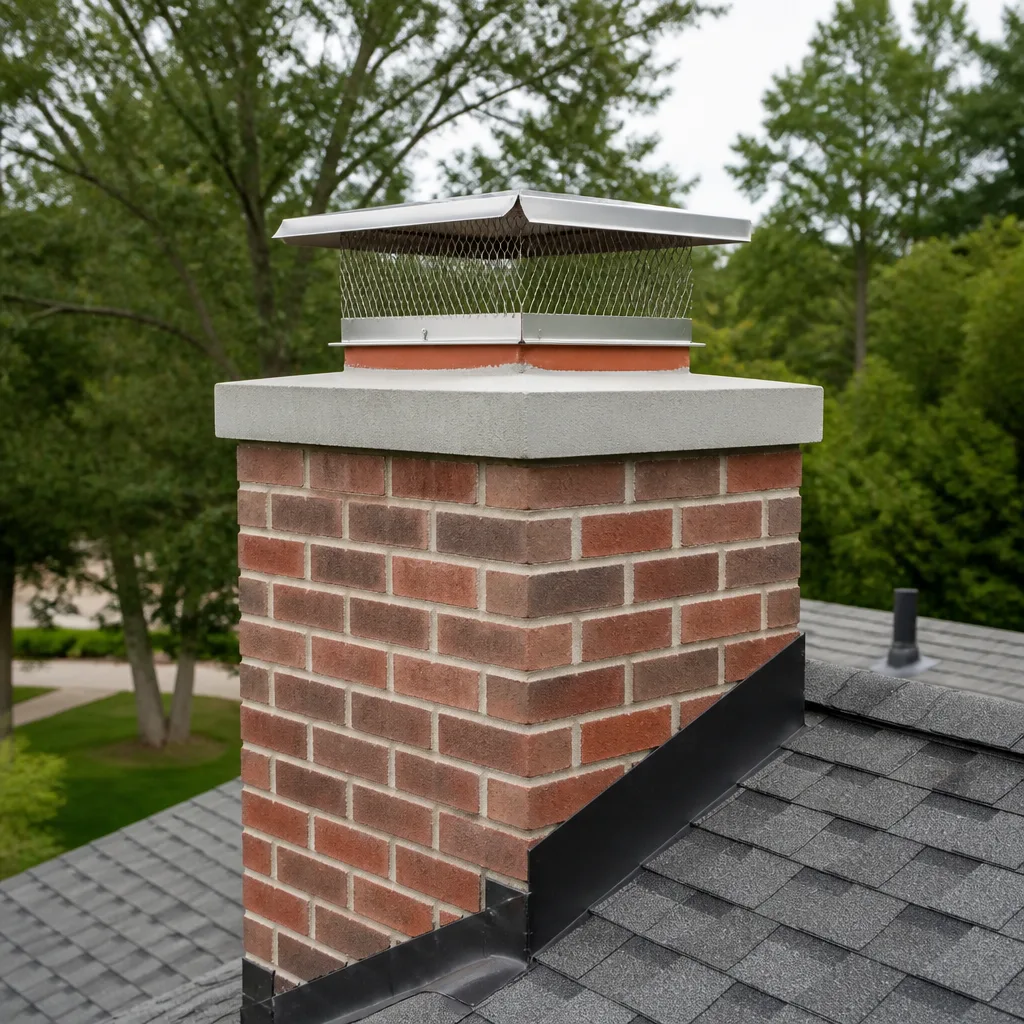
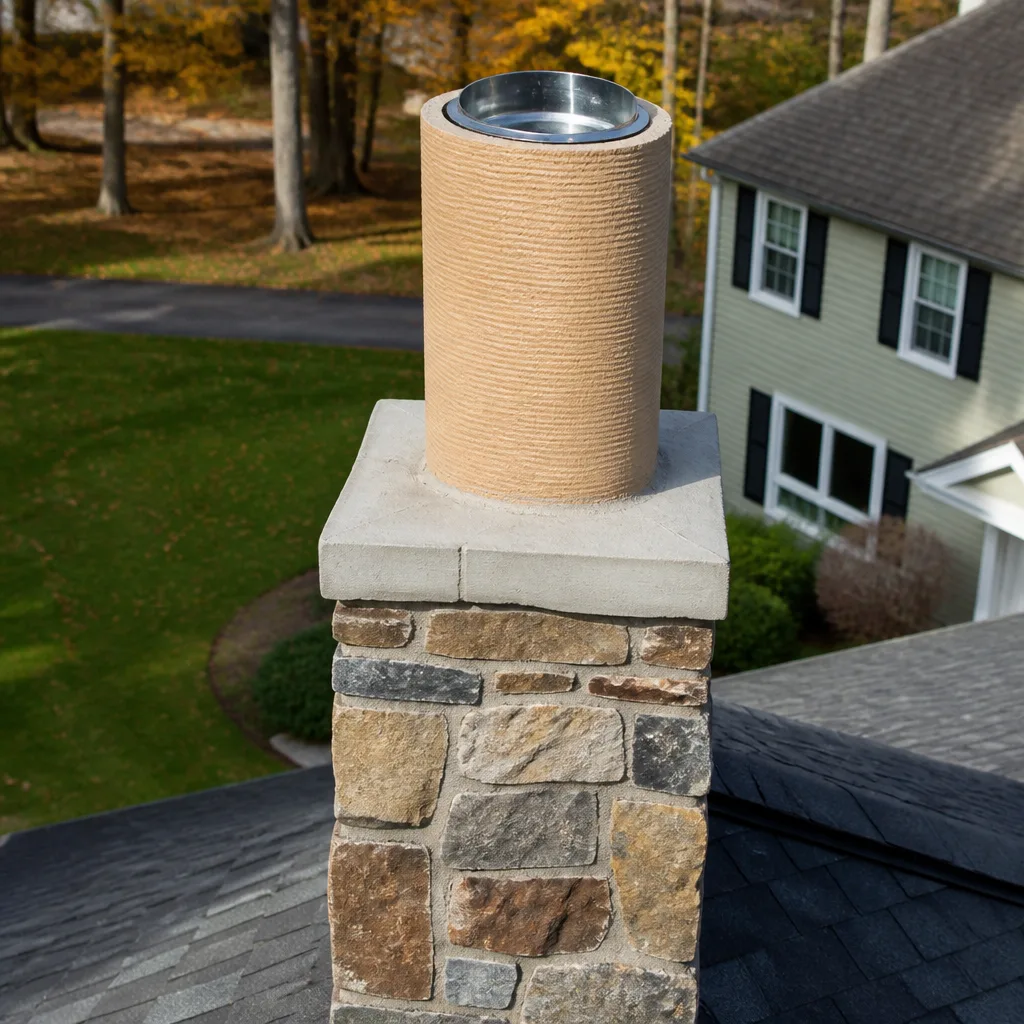
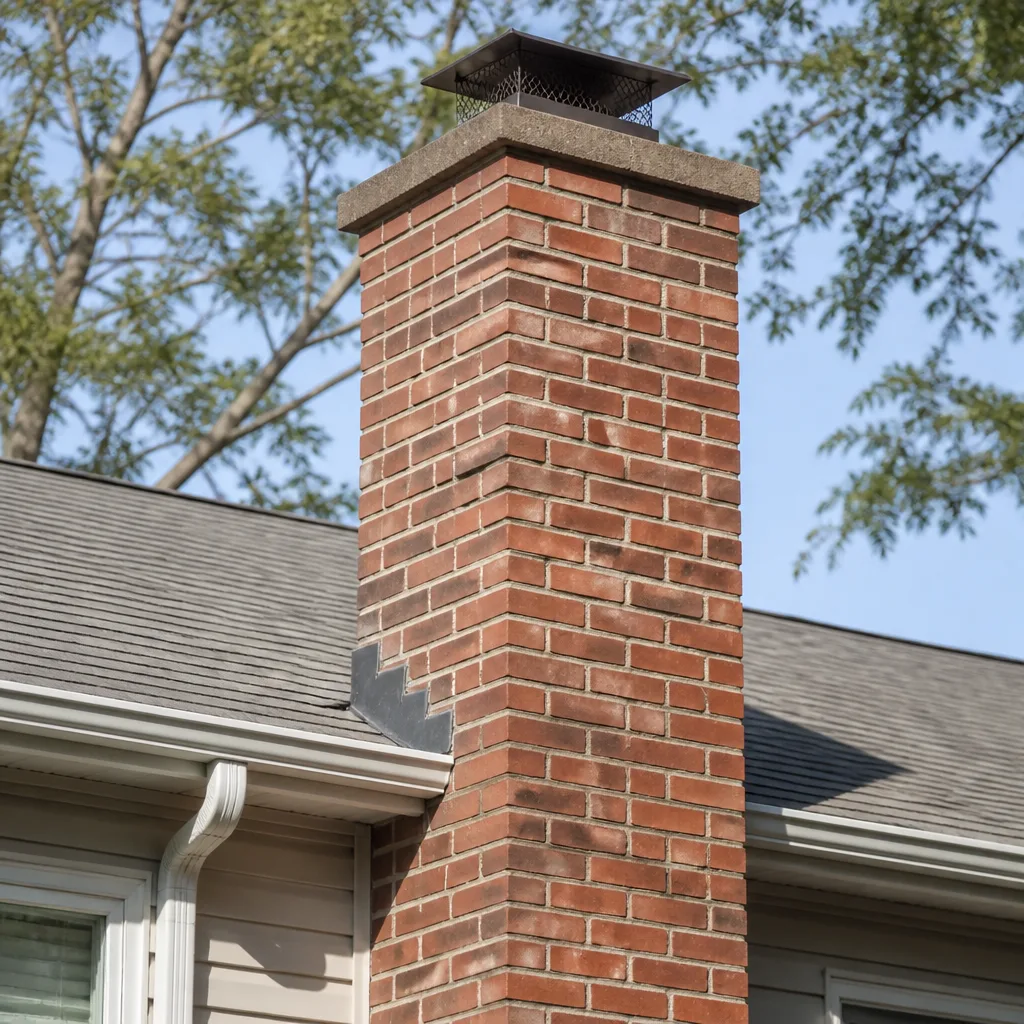
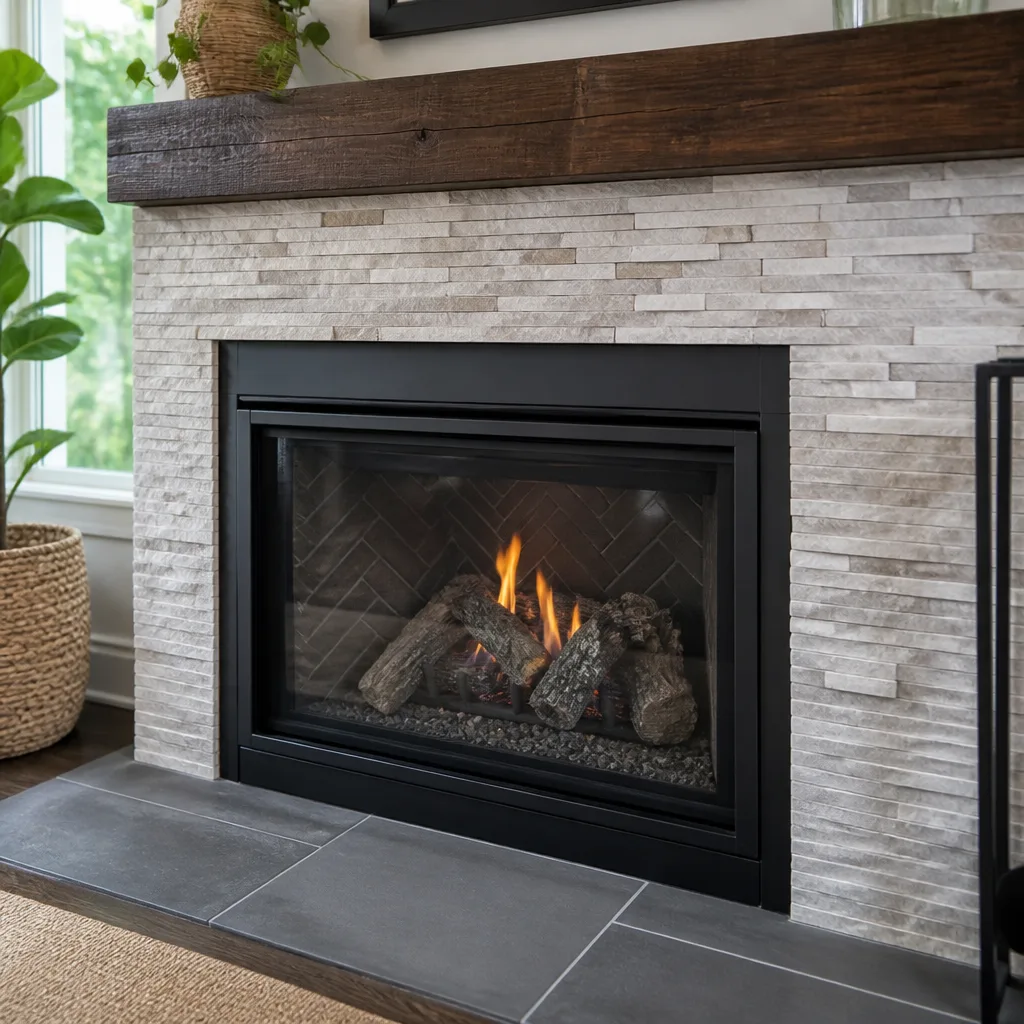
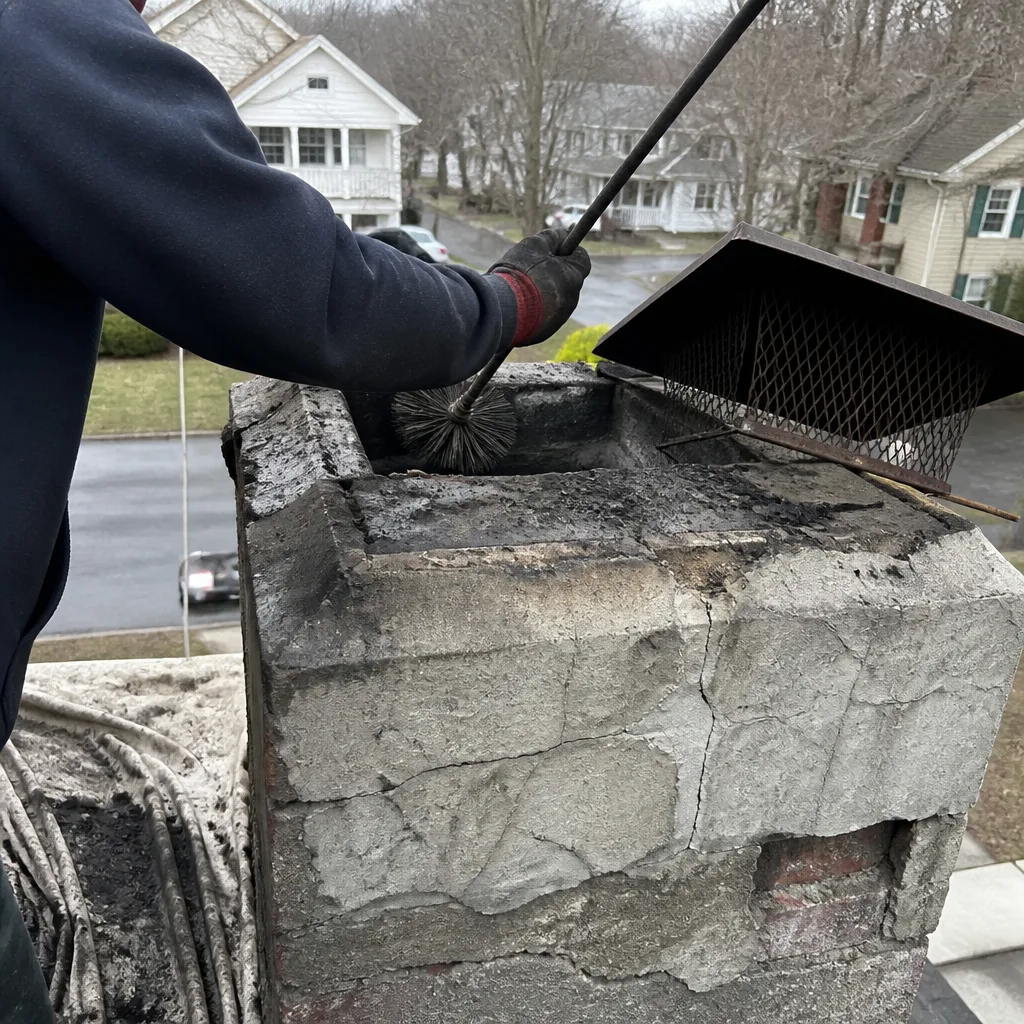 Before
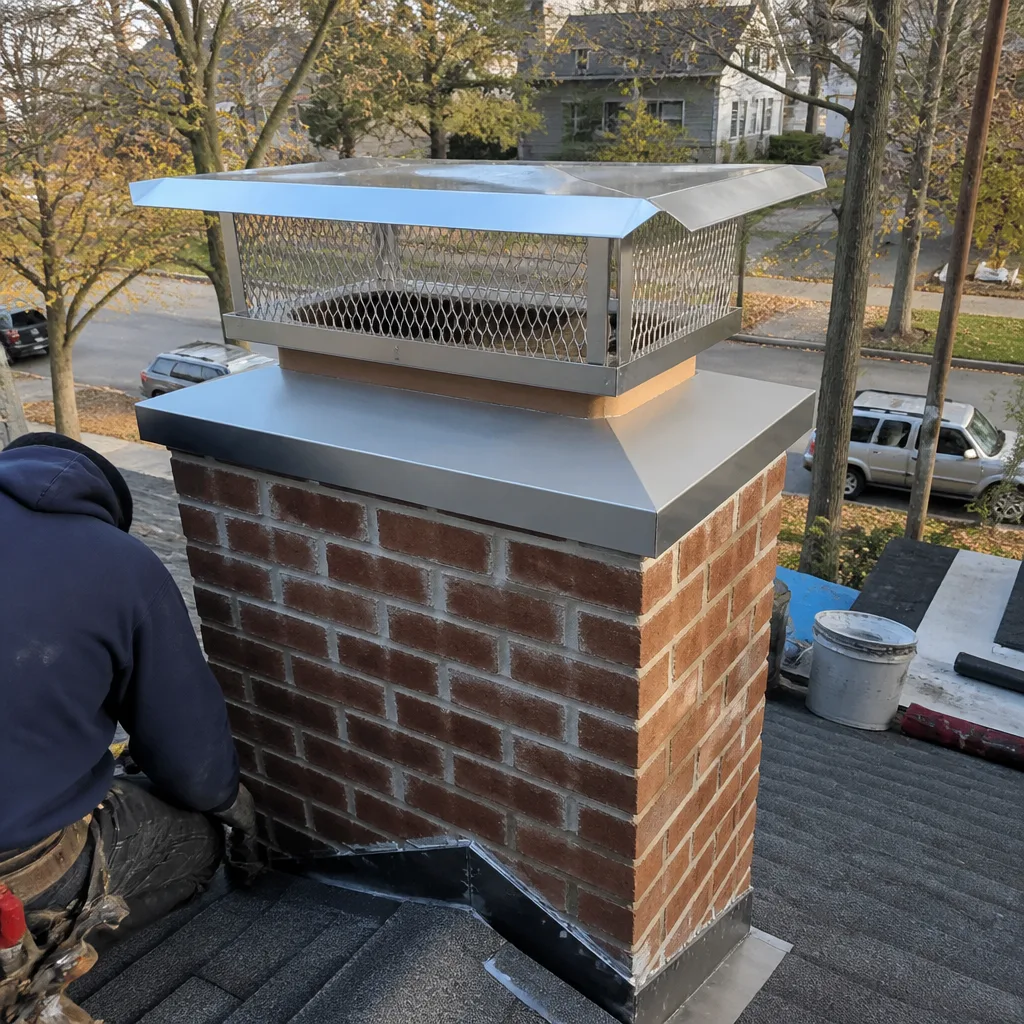 After
After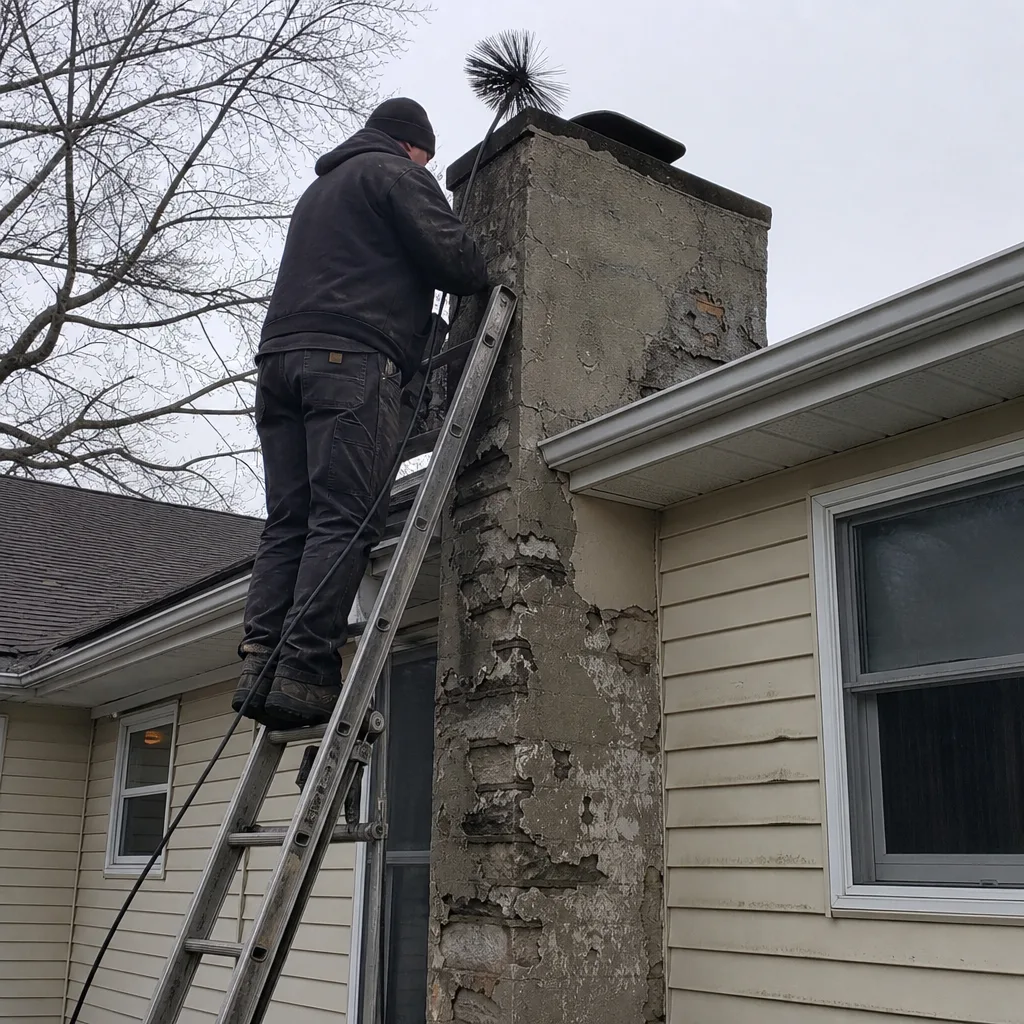 Before
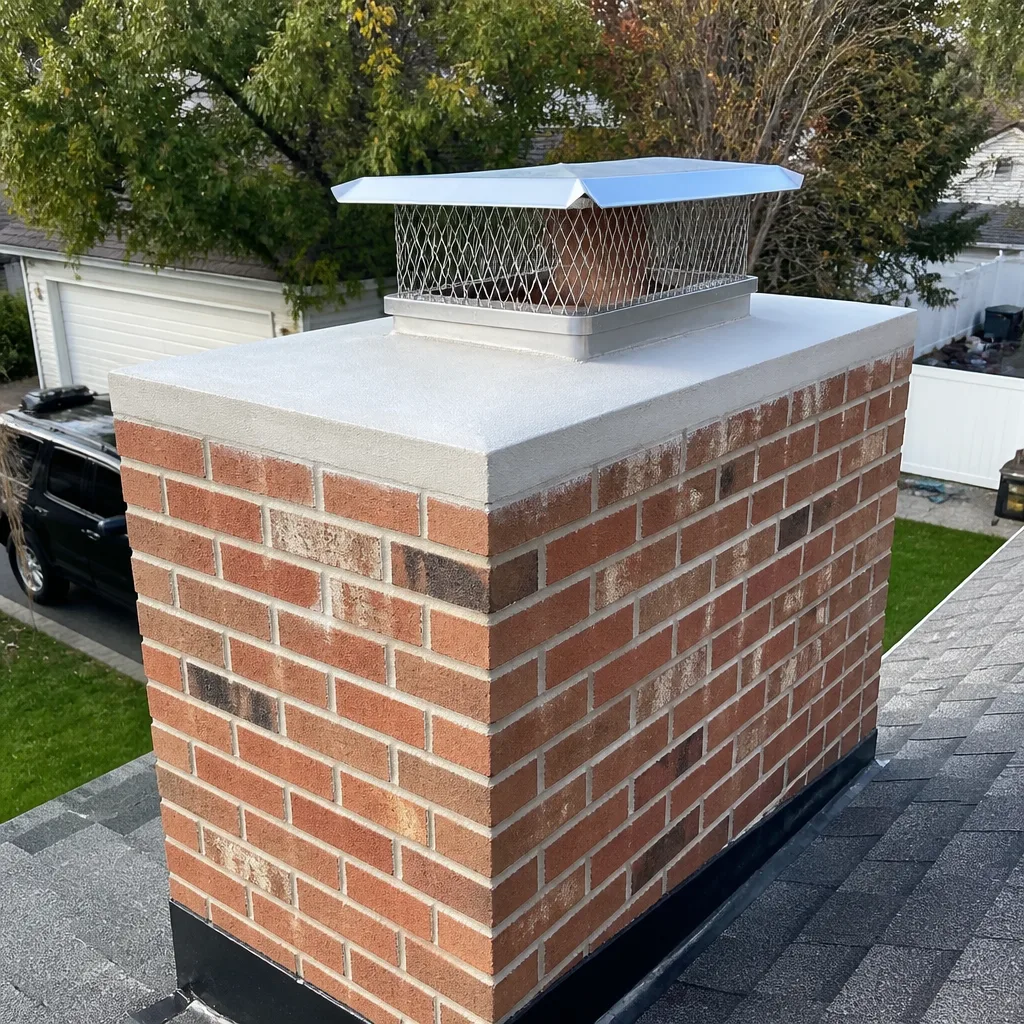 After
After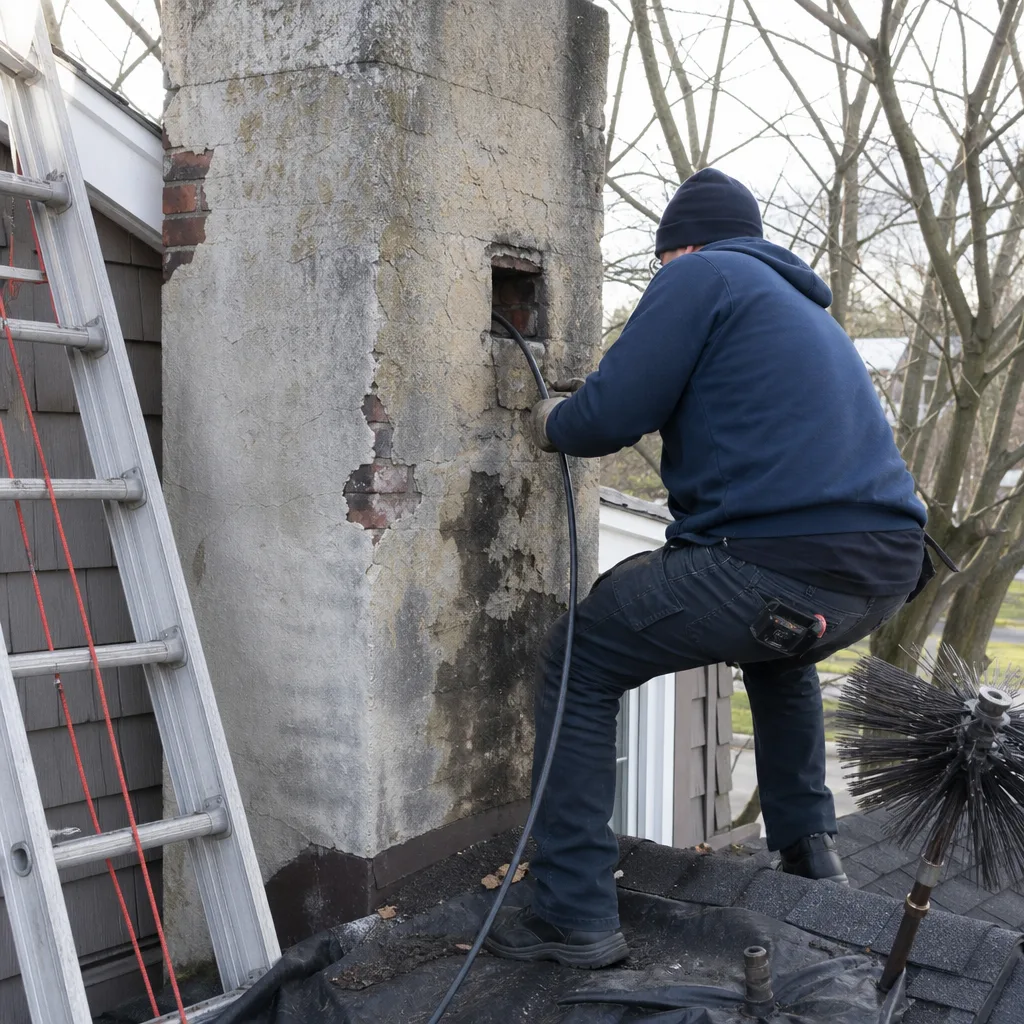 Before
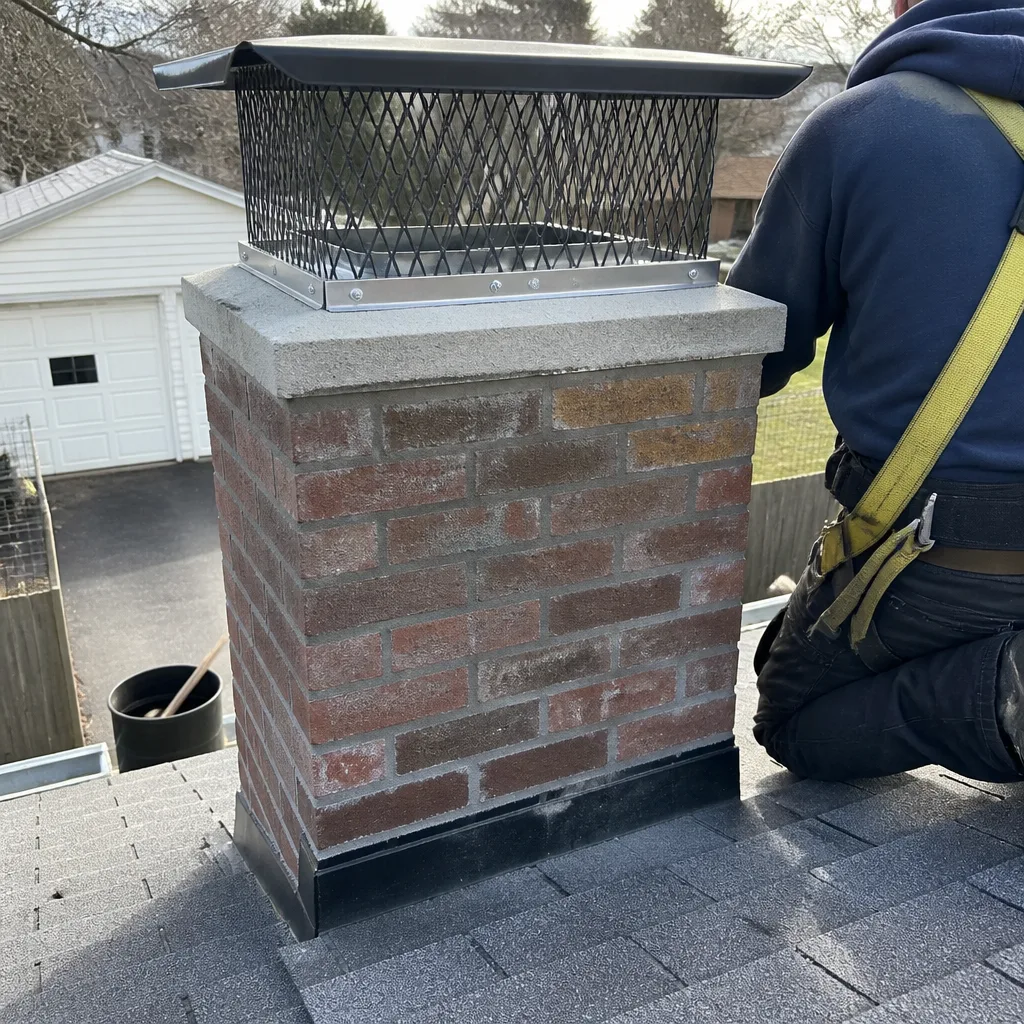 After
AfterCreosote Removal in Deer Park, NY
Creosote removal in Deer Park typically runs between $150 and $450, depending on how much buildup is present and what stage it has reached. Most homes on a regular Chimney Cleaning & Sweep schedule stay in the lower range; if you have been burning for a few seasons without a cleaning, expect the job to take longer and cost a bit more. Either way, Top Hat Chimney gives you the exact number before a single brush comes off the truck.
Wendell Pike has been sweeping chimneys in Suffolk County since 1999, and Deer Park is one of the communities he knows well. The ranch homes and Colonials along Commack Road and around Carlls Straight Path tend to run their fireplaces hard through November and February, which means the flues see real use – and real creosote. If your chimney has not been cleaned in the last twelve months, there is a decent chance some level of creosote buildup is already sitting in there. Our full Chimney Cleaning & Sweep in Deer Park service covers the whole flue system, and creosote removal is the core of that work.
Call (631) 214-2108 and a live person will answer – possibly Wendell himself. Free estimate, upfront price, no surprises on the invoice.
What Creosote Actually Is (and Why the Stage Matters)
Creosote is the byproduct of incomplete combustion. When wood smoke rises through a flue that is cooler than ideal, the unburned particles condense on the liner walls. Over time, they layer up. The problem is that not all creosote is the same, and the stage it has reached changes everything about how – and how urgently – it needs to come out.
First-degree creosote looks like dry, flaky soot. It brushes off easily and is what a chimney should look like at its annual Fireplace Cleaning. Wendell’s rotary brushes handle this in under an hour on most Deer Park homes.
Second-degree creosote is darker, shinier, and porous – almost like tar granules. It needs heavier mechanical scrubbing and sometimes a chemical application to fully break it loose. You see this in flues that have gone two or three years between cleanings, or in homes where green or wet wood was the main fuel.
Third-degree creosote is the one that changes the conversation. It has baked into a hard, glazed coating that bonds directly to the liner surface. A brush alone will not touch it. At this stage, chemical treatment with a product like HeatShield or a dedicated creosote remover has to soften the glaze first, followed by mechanical removal – and in some cases, the liner itself may need inspection for damage that occurred underneath. Third-degree also carries serious fire risk; the ignition temperature drops significantly, and a chimney fire can reach over 2,000 degrees. That is not a scare line – it is the number the National Fire Protection Association has published for decades.
First-degree is a brush job. Third-degree is a glaze – catch it early.
When You Need Creosote Removal
- It has been more than a year since your last sweep. The NFPA recommends annual inspections and cleanings for any chimney in active use. Deer Park winters are cold enough that most households run their fireplace or wood stove at least forty or fifty times a season – that is enough use to build up meaningful deposits.
- You smell something oily or asphalt-like near the fireplace. That sharp, heavy smell is almost always second- or third-degree creosote baking during a fire. First-degree does not smell much; when you start noticing an odor, the buildup has gotten denser.
- Your fires smoke back into the room. A heavily lined flue has a narrower effective diameter. Reduced draft means smoke follows the path of least resistance – which is sometimes straight into your living room. In older Deer Park homes with seven-inch liner inserts, even modest buildup changes the draw noticeably.
- You burn primarily pine or wood that was not fully seasoned. Unseasoned wood and softwoods produce far more smoke per cord, which accelerates creosote layering. If your cord wood came from a local yard and was cut recently, it may still be holding too much moisture.
- Your last sweep was done by a company that only charged $49. A sweep at that price point is almost certainly a bait-and-switch approach, and the actual work may have been minimal. If there is any doubt about what was done – or not done – a second opinion from Wendell costs nothing.
- A home inspector flagged the flue during a sale. Deer Park sees a steady stream of home transactions, and inspectors regularly flag uncleaned flues as a condition item. We can document the cleaning and provide a written report for your closing file.
Our Creosote Removal Process
- Visual pre-inspection from firebox to crown. Before any tool goes in, Wendell or his crew assesses the flue with a camera drop if there is any reason to suspect third-degree buildup or liner damage. You see the footage on a monitor. No guessing, no guessing games – a plain-English verdict before work starts.
- Drop cloths and fireplace prep. The firebox opening gets sealed with a fitted cover and a HEPA vacuum hose runs continuously. Deer Park homes are generally tight on square footage; we treat the living room floor and furniture with the same attention we would want in our own house.
- Rotary or hand-brush cleaning from the top. For first- and most second-degree creosote, Wendell works from the roofline down with rotary brush systems. The swept debris falls into the sealed firebox and is vacuumed out directly – it does not float through the room.
- Chemical treatment for advanced glazing. If second-degree buildup is heavy or third-degree is confirmed, we apply a creosote remover before or after mechanical scrubbing, depending on what the flue looks like. This is where experience matters: applying the product to a flue that does not need it wastes your money; skipping it on a flue that does leaves the problem half-solved.
- Post-removal inspection and documentation. Once the flue is clean, we do a final camera pass and go over the results with you. If there is damage to the liner – cracks, spalling, or joint separation – we will say so clearly, with the footage to back it up, and quote any repair separately with upfront pricing. We use HeatShield liner resurfacing for suitable candidates; for full replacements, DuraFlex flexible liner systems are our standard recommendation.
- Cleanup and written report. Every job ends with the work area cleaner than we found it. You get a written summary of what was removed, what the flue condition is now, and what (if anything) we recommend watching before next season.
Creosote Removal Pricing in Deer Park
Creosote removal in Deer Park typically costs between $150 and $450 for most residential flues. The spread is real, and it comes down to three things: how long since the last cleaning, what degree of buildup is present, and whether the flue needs a Level 1 Inspection or camera inspection first. Here is how it generally breaks down:
| Situation | Typical Price Range |
|---|---|
| Annual maintenance cleaning (light first-degree buildup) | $150 – $225 |
| Moderate buildup / second-degree creosote (2-3 years since last sweep) | $225 – $325 |
| Heavy second-degree or third-degree glazing requiring chemical treatment | $325 – $450+ |
| Camera inspection (included when liner damage is suspected) | Bundled with cleaning; no separate trip charge within service county |
If any repair comes out of the inspection and it runs over $200, the standing $40 discount applies automatically – no coupon needed, no asking. Seniors and veterans always receive 10% off their total. And if another company has already given you a written estimate, we will look at it for free and tell you honestly whether it is fair.
The price you hear on the phone is the price on the invoice. If the scope changes because we find something unexpected inside the flue, we stop, show you what we found, and re-quote before continuing. That is the only way Wendell runs a job.
What Makes Top Hat Chimney Different for Deer Park Homeowners
There is no shortage of sweep companies working Long Island. Some of them will show up in a magnetic-sign van, quote $79 on the phone, and find reasons to tack on $400 more once they are standing in your living room. Wendell started Top Hat Chimney in 1999 because he was tired of watching that happen to his neighbors, and the business has not changed shape since then.
When you call (631) 214-2108, a real person answers around the clock. There is no voicemail box, no call center somewhere off the island, no automated system asking you to press 1. If it is 9 p.m. on a Thursday and you just noticed a heavy creosote smell coming from your fireplace, someone picks up – and that someone can answer real questions about what you are smelling and whether it is urgent.
Wendell puts his name on the work. He publishes his license number. He runs into his customers at the Deer Park ShopRite and the Dix Hills farmers market, which means he has every incentive to do the job right the first time. That accountability is the 90-Day Done Right Promise in practice: if something is not right after we leave, one call brings us back at no additional cost, in writing, on every job.
Background-checked, uniformed crew. Real arrival windows with a call if it slips. No trip charge inside the county. These are not policies that live on a website and disappear at the door – they are the way every job runs.
From the Top Hat Chimney home page you can learn more about the full range of services we offer across Suffolk County.
Key Takeaways
- Creosote has three stages; only first-degree is a simple brush job. Get it inspected annually so it never reaches third-degree.
- Deer Park homes on active burn schedules should expect a cleaning every twelve months – more often if wet wood or softwoods are the primary fuel.
- A camera inspection is part of the process any time liner damage is suspected – you see the footage, not just the verdict.
- Pricing is upfront, in plain numbers, before work starts. The $40 repair discount, senior and veteran discount, and free second-opinion offer are always in play.
- The 90-Day Done Right Promise means Wendell’s name stays on the job until it is right – no fine print, no chasing down a call center.
FAQs – Creosote Removal in Deer Park
How much does creosote removal cost in Deer Park, NY?
Creosote removal in Deer Park runs $150 to $450 for most homes, depending on how much buildup is present and what degree of creosote it has become. Light annual maintenance cleaning stays at the low end; heavy glazing that needs chemical treatment pushes toward the higher range. The exact number is always quoted before work begins. Call (631) 214-2108 for a free estimate – no trip charge inside the county.
How do I know if I have dangerous creosote buildup?
Third-degree creosote – the kind that poses real fire risk – typically shows up as a shiny, hard, tar-like coating visible inside the firebox opening or flue collar. An oily or asphalt smell during or after a fire is also a reliable sign that buildup has progressed past the first stage. The clearest answer comes from a Level 2 Inspection with a camera, which Wendell includes whenever there is any doubt about what is in the flue. If you have not had the chimney swept in two or more years, assume there is meaningful buildup until a sweep tells you otherwise.
Can I remove creosote myself?
First-degree creosote can be loosened with store-bought chimney-cleaning logs, but those products move residue around more than they remove it – they are not a substitute for a mechanical sweep. Second- and third-degree creosote should be handled by a trained sweep. The work involves reaching the roofline, handling rotary brush systems under tension, and, for advanced glazing, applying chemical treatments correctly. Beyond the ladder risk, disturbing a heavy creosote deposit without a sealed vacuum setup will coat your living room in fine black particulate. It is a job worth leaving to someone who has done it a few thousand times. Call us and we will tell you honestly if the situation is minor enough to watch or if it needs immediate attention.
How often should I have my chimney cleaned to prevent creosote buildup in Deer Park?
Once a year is the standard, burn season or not. Chimneys deteriorate in the off-season too – moisture, animal activity, and freeze-thaw cycles do damage that has nothing to do with creosote. If you burn more than two to three cords of wood per season, or if your primary fuel is pine or unseasoned hardwood, a second cleaning mid-season is worth considering. Deer Park’s stretch of cold weather from November through March means most active fireplaces are getting real use; annual cleanings keep first-degree buildup from quietly becoming a second-degree problem over several winters.
Written by Wendell Pike, Owner at Top Hat Chimney, serving Deer Park since 1999.