
Level 1 sweep and inspection to the NFPA 211 annual standard - flue, crown, cap, and flashing checked and photographed
Chimney sweep logs do not sweep chimneys. They loosen some creosote - which then falls where a brush and vacuum still have to collect it.
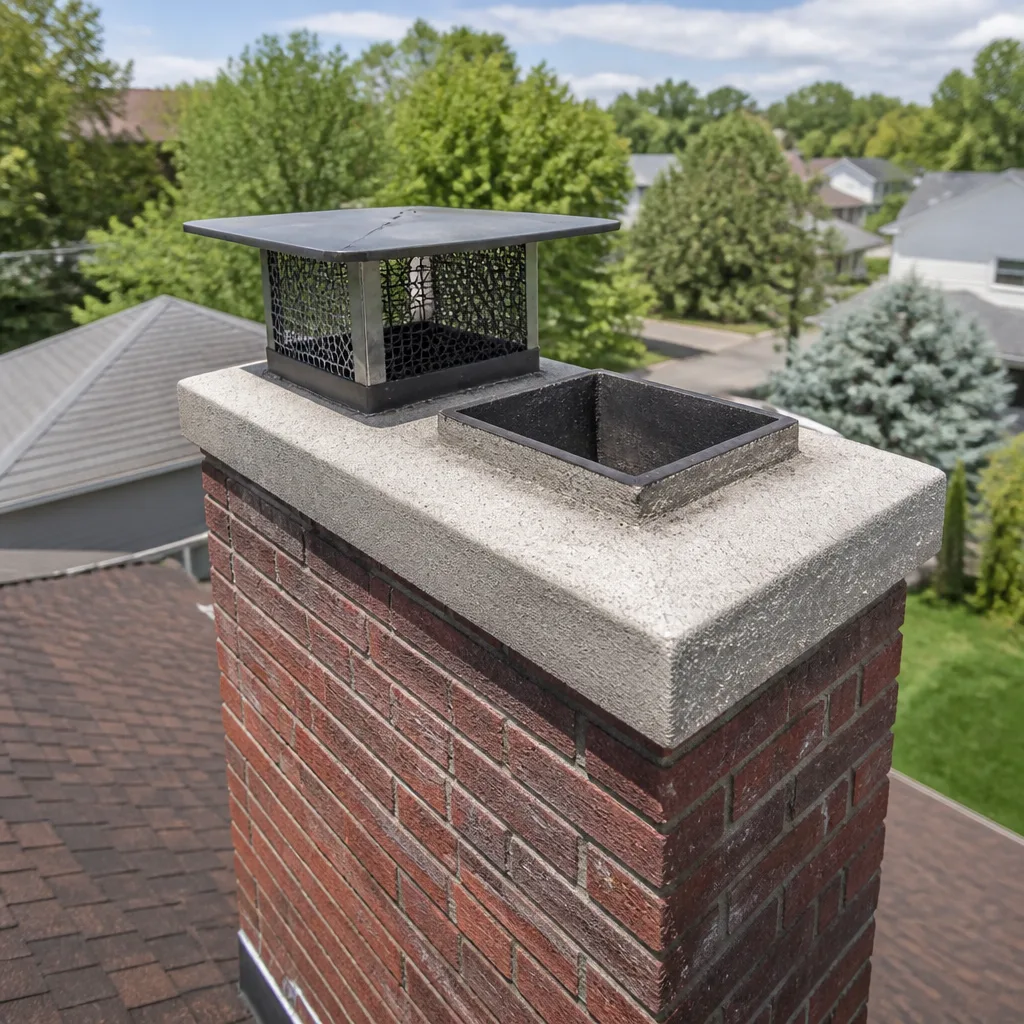
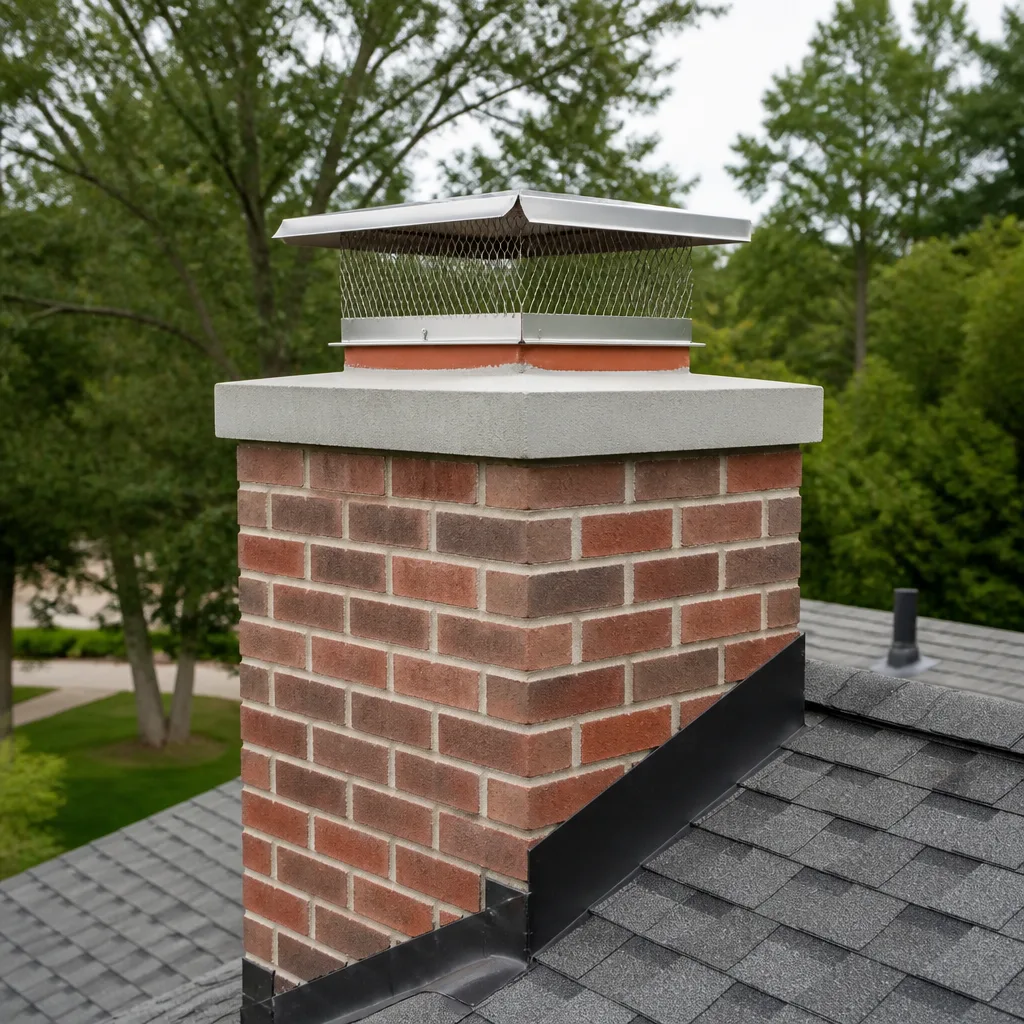
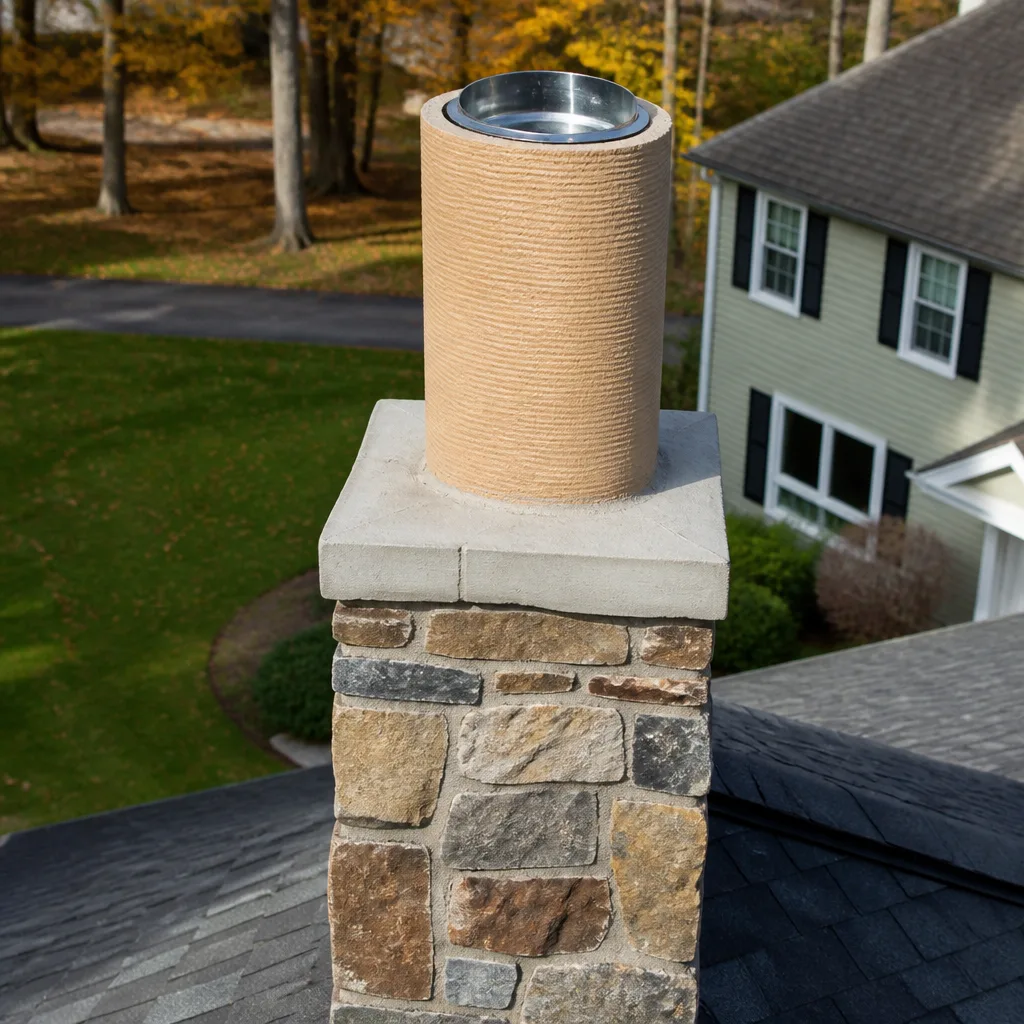
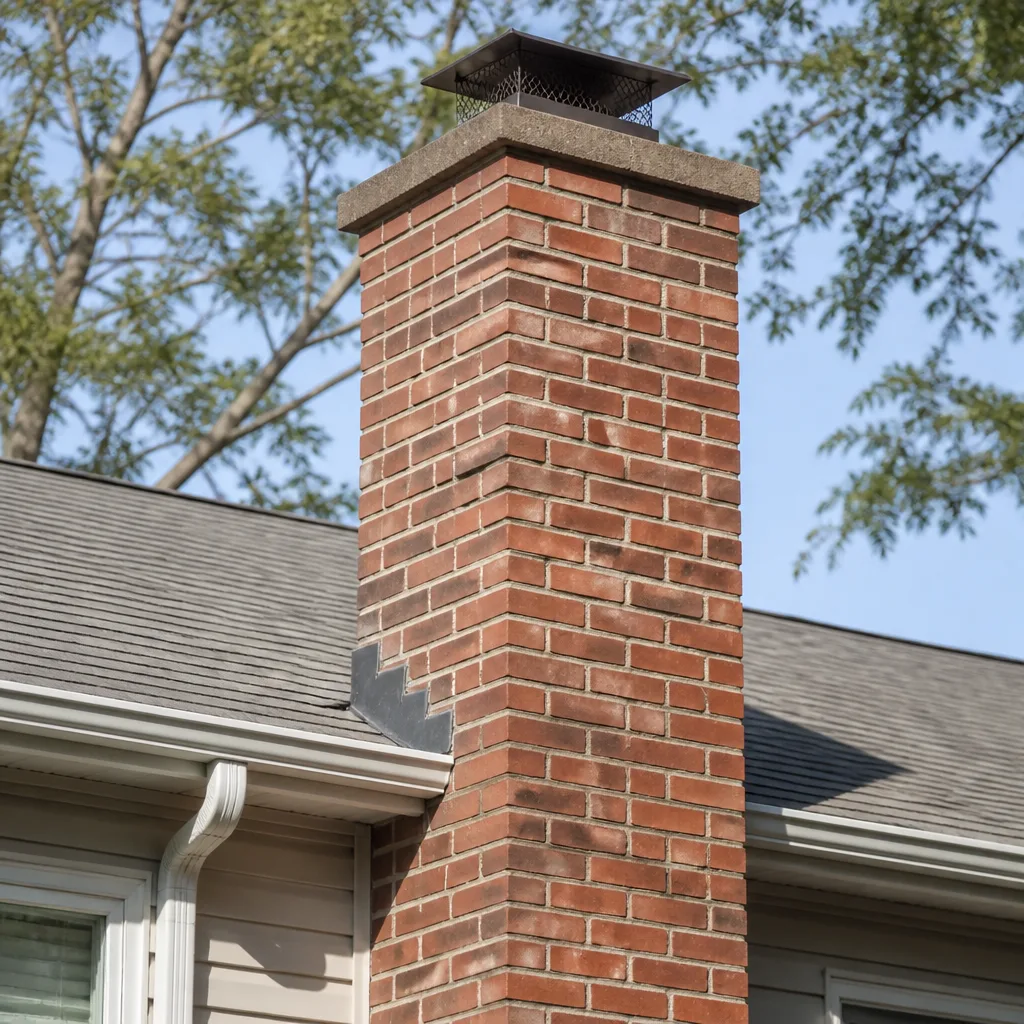
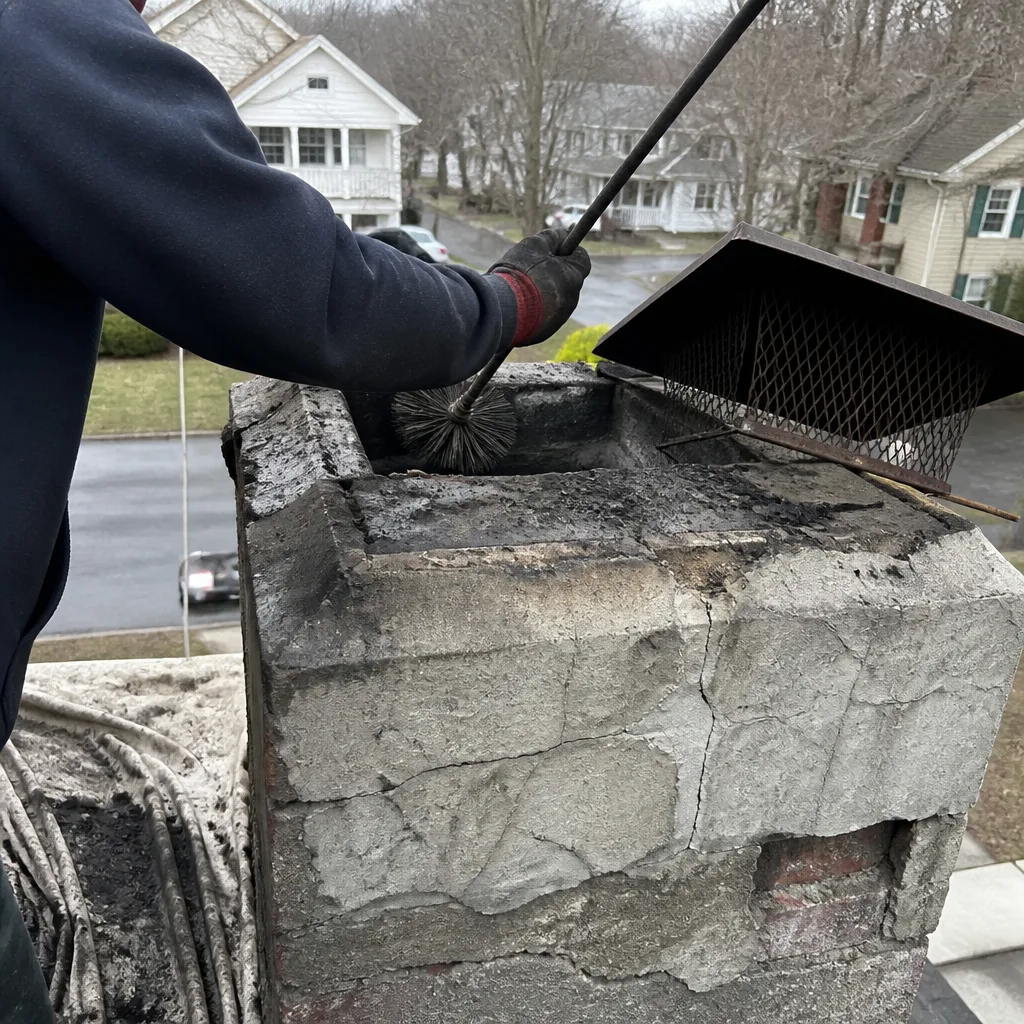 Before
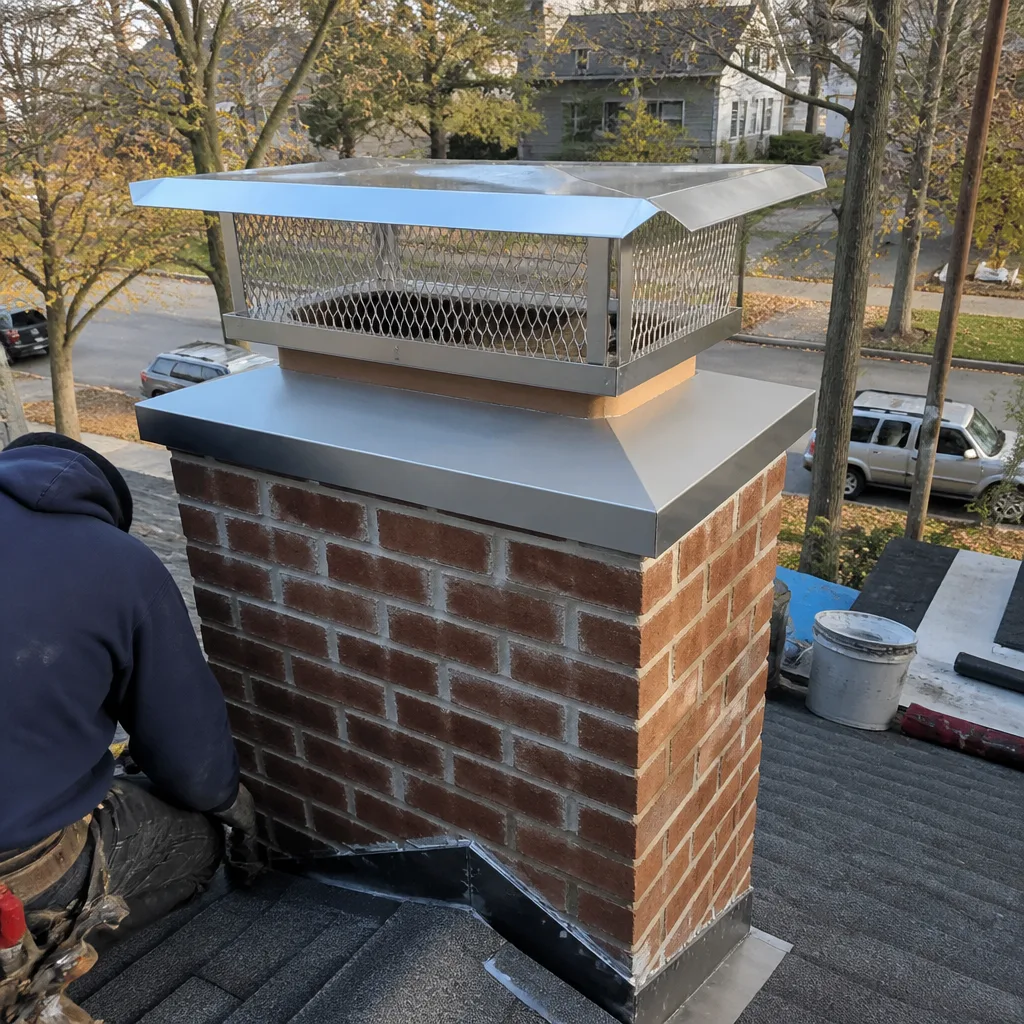 After
After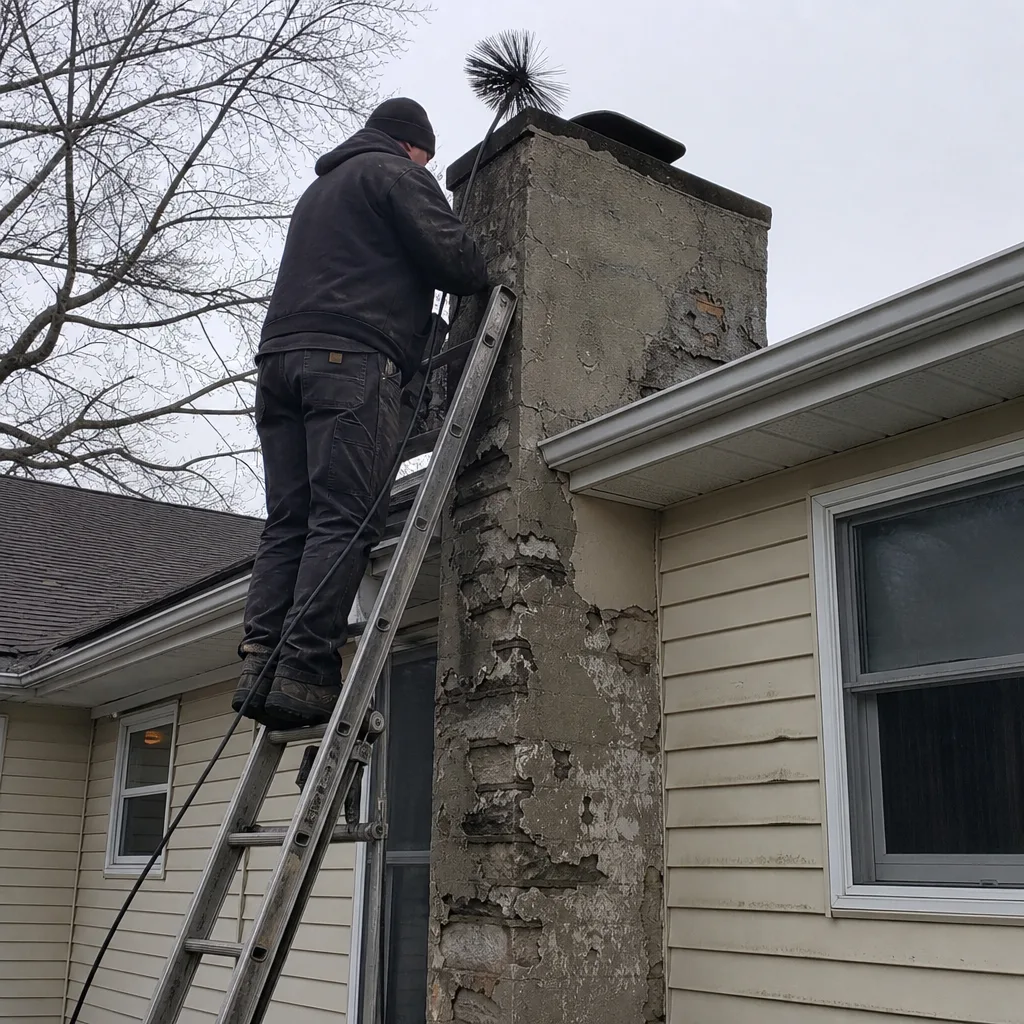 Before
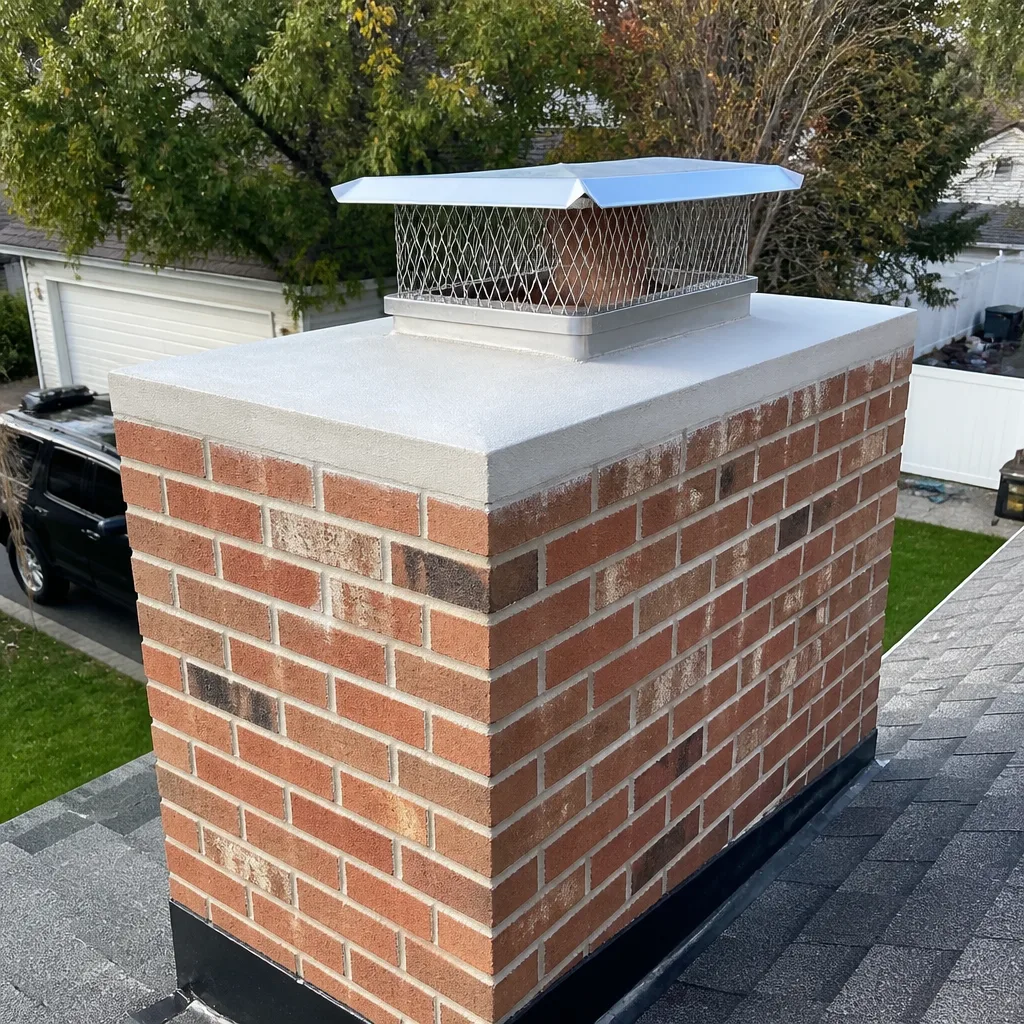 After
After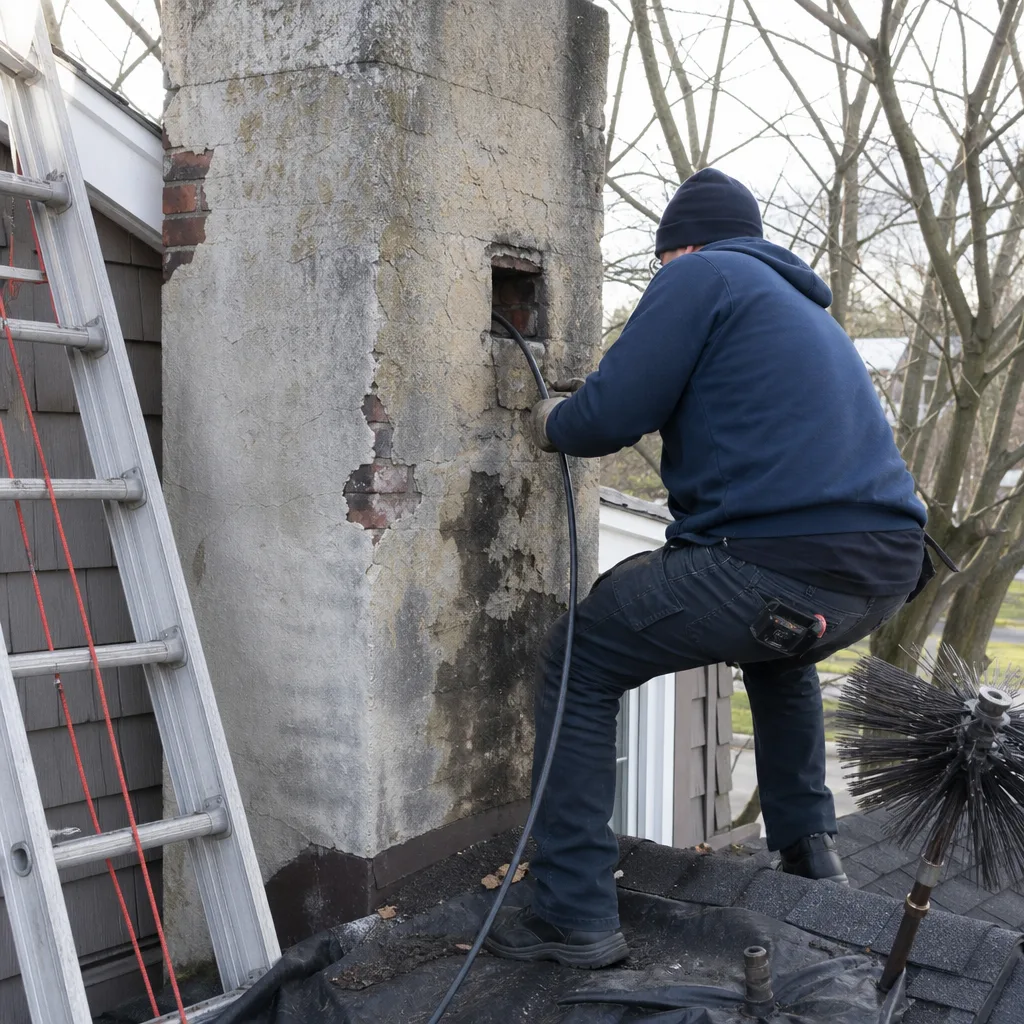 Before
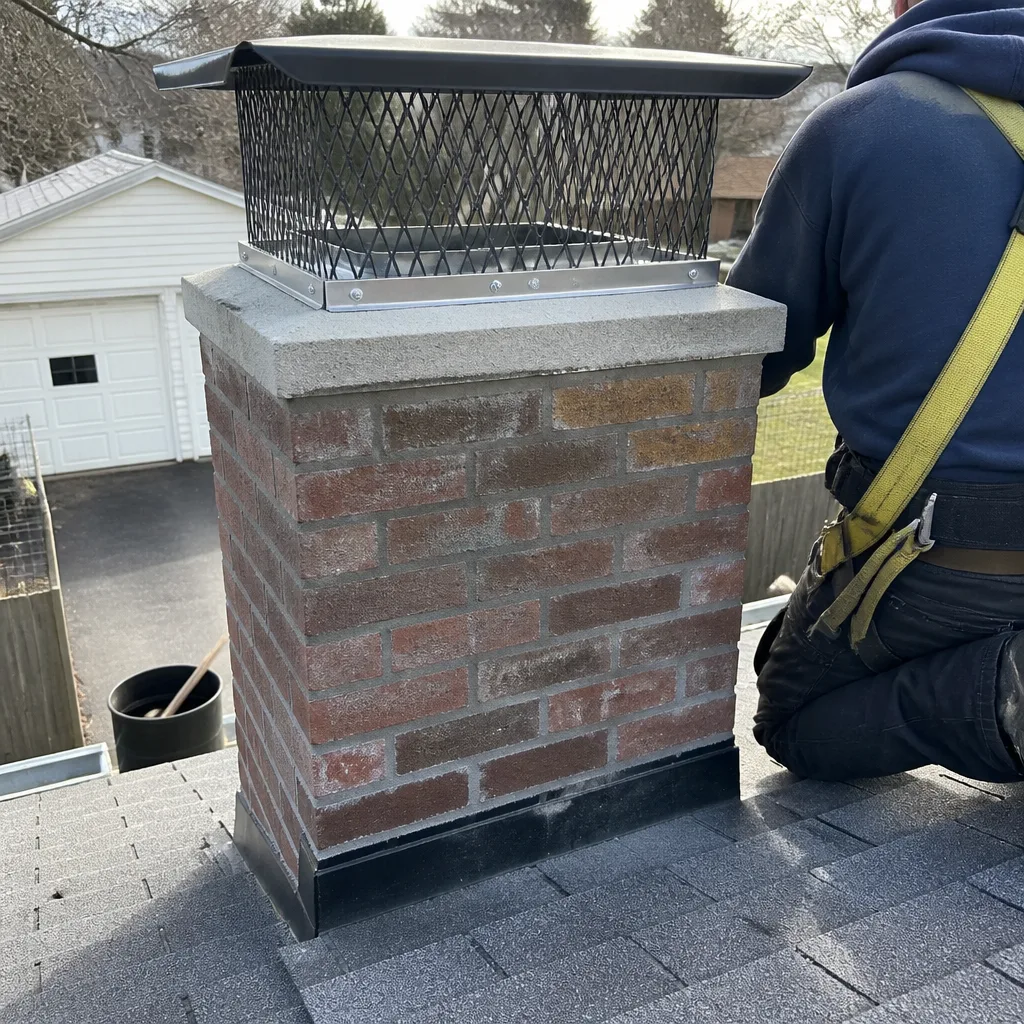 After
AfterHeatShield Flue Liner Replacement: The Deer Park Owner’s Guide
HeatShield flue liner replacement in Deer Park typically runs between $2,800 and $4,500 installed, depending on the liner diameter, flue height, and whether we’re repairing a section or relining the full run. We stock HeatShield-compatible liner components on our trucks and can usually complete the work in a single visit once we’ve scoped the flue. Most Deer Park homeowners discover they need this part after a chimney inspection turns up cracked flue tiles, or when a sweep’s camera shows the HeatShield coating has begun to fail and expose the original clay liner underneath.
The symptom that gets the call is usually one of two things: a musty, smoky smell backing into the living room, or white flaky mineral deposits showing up on the fireplace face. Both point the same direction. The liner’s job is to keep heat, gas, and moisture moving up and out. When that barrier breaks down somewhere in the middle, everything downstream of the crack becomes a slow leak into masonry, framing, and air you breathe.
Here’s what you need to know before you spend a dollar.
- What we install: HeatShield-compatible flue liner replacements, sized to your existing flue profile, with the old coating removed and the new one applied and cured per spec.
- What we price: a firm number before work starts, not a phone estimate that grows at the door.
- How we verify: camera before, camera after. You see exactly what we saw.
- How we stand behind it: 90-Day Done Right Promise in writing on every job.
Which HeatShield Models This Applies To
HeatShield is a brand name for a specific type of flue restoration product that gets applied inside an existing chimney, usually over old clay tile liners. We’re an independent Long Island chimney company, not a HeatShield dealer or manufacturer affiliate. But we’ve worked with their product line long enough to know the part matchups that matter.
The replacement requirement almost always comes down to the flue’s internal diameter and the material behind the coating. HeatShield’s system is sized to standard residential flue dimensions, most commonly 6″, 7″, and 8″ round, with some rectangular profiles on older Deer Park homes built before the 1960s. If you have a HeatShield label or receipt from the original install, bring it to the inspection. It gives us the exact product series. If you don’t, we identify what’s in there by camera and measure the flue at the top and at the firebox opening. That tells us whether the liner is round or rectangular, whether it’s a single-flue or multi-flue application, and whether the original install used HeatShield’s cement-based resurfacing product or the section-by-section joint repair material. The replacement part has to match that system, otherwise the new coating won’t bond correctly to the remaining substrate.
On the OEM versus aftermarket question: HeatShield replacement product is a proprietary ceramic-cement material. There are generic flue resurfacing products that claim similar performance. Some hold up. Some don’t. For Deer Park’s freeze-thaw cycle, which runs from Thanksgiving to late March, we recommend staying with the HeatShield system if that’s what was originally installed. Mixing a generic resurfacer over partially intact HeatShield is where we’ve seen problems start within two or three seasons. The thermal expansion rates don’t match, and a Long Island winter will find that seam. Every time.
Signs Your HeatShield Flue Liner Replacement Is Failing
- White or gray flaking inside the firebox. This is the coating delaminating. As HeatShield material ages and absorbs moisture, it begins to spall off the underlying clay. The flakes fall down into the smoke chamber and show up around your damper. Catch it at this stage and the repair is still straightforward.
- A persistent smoky smell even when the damper is open. That’s flue gas finding a new path. When the liner coating cracks, smoke and carbon monoxide can travel into the wall cavity instead of out the top. You can’t see it, but you can smell it.
- Efflorescence on the chimney’s exterior brick. White mineral staining on the outside of your chimney usually means moisture is escaping through the masonry. A failing flue liner lets condensation soak into the brick from inside. By the time you see the staining on the outside of a Deer Park chimney, water has been moving through that wall for a season or more.
- Crumbling pieces of clay tile at the cleanout door. The HeatShield coating is only as strong as what it’s bonded to. When the underlying clay tile starts to fail beneath it, pieces break off and collect at the bottom of the flue. Open the cleanout at the base of your chimney and look for debris.
- Your sweep flags it on camera. This is the most common path in Deer Park. The inspector sends the camera up, and the video shows cracks, gaps, or missing sections of the coating. You get the footage. You see the problem with your own eyes. Nobody has to sell you anything.
Replacement Cost & What’s Included
For a standard single-flue HeatShield liner replacement in Deer Park, you’re looking at $2,800 to $4,500 installed. That includes the full scope: camera inspection before work, surface prep of the existing flue, the HeatShield replacement material applied to the full flue length, cure time, and a follow-up camera pass to confirm the coating is continuous end to end.
What drives the spread is flue height and access. A one-story ranch off Grand Boulevard with an easy roof pitch sits at the lower end. A two-story colonial with a steep pitch, or a chimney that requires significant setup time to reach safely, lands higher. Multi-flue chimneys where two liners run side by side cost more because both flues have to be individually prepped and coated. The price you hear on the phone is the price on the invoice. No tool-comes-off-the-truck surcharge, no at-the-door renegotiation. The 90-Day Done Right Promise covers the workmanship, in writing.
DIY or Call Us?
Here’s the honest split. You can absolutely check your cleanout door for debris, look for flaking in the firebox, and keep an eye on exterior brick for new efflorescence. That’s smart homeowner maintenance, and it’ll catch a failing liner early. What you shouldn’t do is attempt any form of flue liner repair from inside the house. Flue liner replacement happens from the top of the chimney, on a roof, with specialized application equipment and material that has to cure in specific temperature and humidity conditions. A Long Island autumn with morning dew and afternoon sun is not a cure schedule you can guess at. And the work itself involves being on a roof, which is where we see too many homeowners get hurt every year.
If you suspect your HeatShield liner is failing, call (631) 214-2108. We’ll scope it, show you the footage, and tell you straight if it needs doing. If it doesn’t need doing, I’ll tell you that too.
FAQs
A properly installed HeatShield liner in Deer Park should give you 10 to 15 years before you see meaningful degradation. Freeze-thaw cycles, burn frequency, and whether the original install bonded cleanly to the clay beneath all move that number. Chimneys that burn softwood most of the winter or that see tall, hot fires will degrade the coating faster than occasional use. Yearly sweeps let us check the lining’s condition while we’re already in there.
Sometimes, yes. If the failure is isolated to a joint or a short section, HeatShield’s joint repair material can fill and seal that spot without a full reline. The call comes down to what the camera shows. If the coating is failing in scattered patches across multiple feet of flue, a full replacement is the only repair that makes sense and we’ll tell you that before you spend. If it’s a contained spot, a section repair will run you considerably less. Call (631) 214-2108 for a camera inspection and a straight answer.
Most Deer Park HeatShield flue liner replacements are done in a single day, start to finish. That’s prep, application, and initial cure. You’ll want to hold off burning for the full cure window, which we’ll give you in writing before we leave. The firebox will be usable again within a few days.
We stock HeatShield-compatible replacement material for the most common flue sizes on our trucks, so the majority of Deer Park jobs get completed without a second visit. Unusual flue dimensions or special-order material may add a few days. We also carry parts and components for DuraFlex and Gelco liner systems, which covers most of what’s installed across Long Island. Call (631) 214-2108 and we’ll tell you what applies to your setup.
Written by Wendell Pike, Owner, Top Hat Chimney - Deer Park, NY at Top Hat Chimney, serving Deer Park and nearby areas.